
Essay
Why Serious Questions Need Time, Depth and Reflection
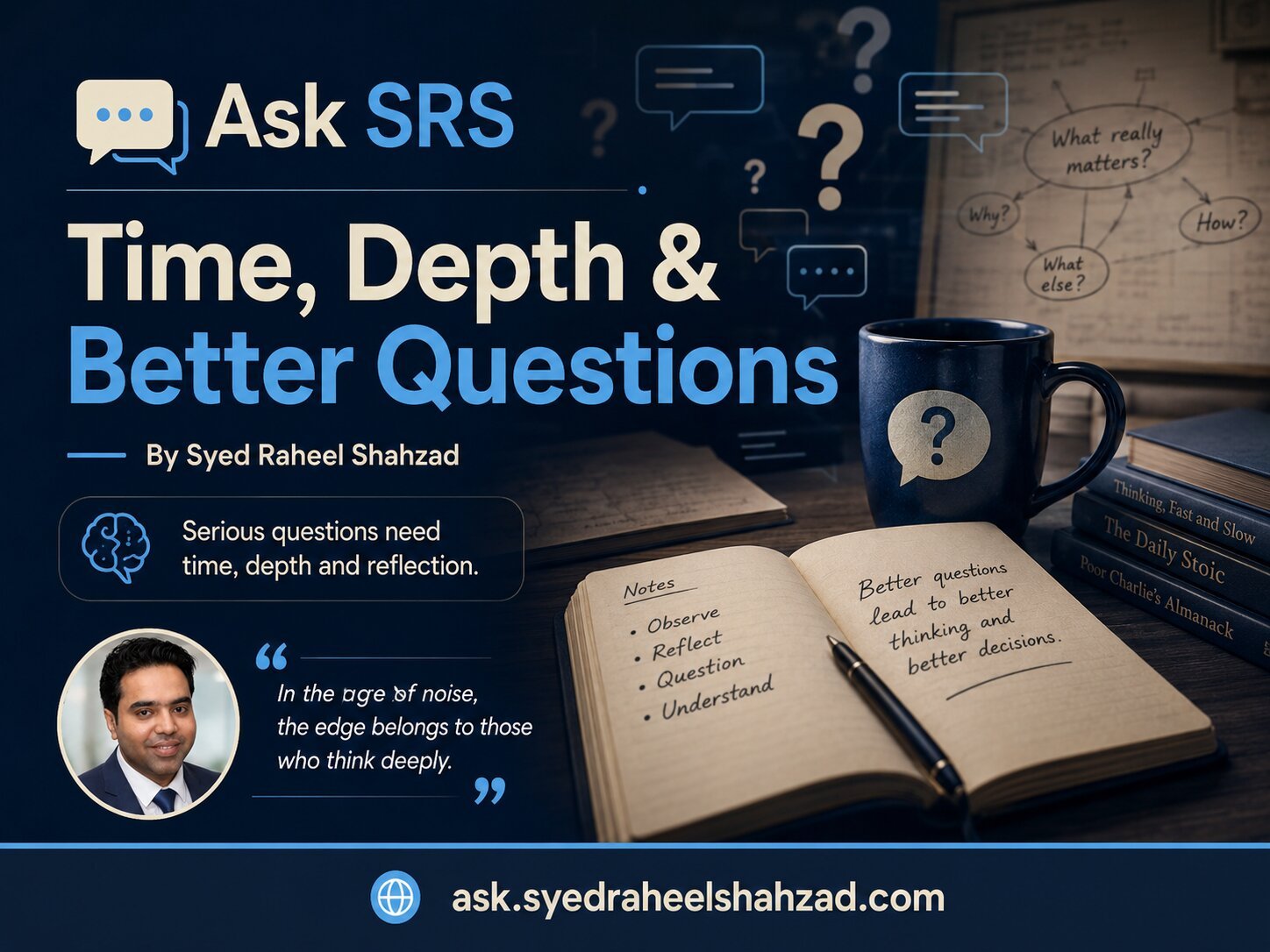
A serious question should not be forced into the fastest possible answer. Some questions need time, context, reading, discussion and reflection before they become useful understanding.
The question
In a noisy digital world, how can a serious question be protected from shallow answers, quick reactions and careless opinions?
Short answer
A serious question needs time, depth and reflection. The first answer may be useful, but it is rarely the full answer. Some questions require patience because they are not only asking for information; they are asking for meaning, direction and responsibility.
Noise gives people more to react to. Reflection gives them a better way to understand what they are reacting to.
Why this matters now
The modern reader is surrounded by fast answers, short reactions, social media opinions, AI summaries and constant digital noise. The danger is not only that people receive too much information. The deeper danger is that people may lose the habit of staying with a serious question long enough for it to become clear.
Some questions should not be answered immediately. They should be held, examined and refined. A serious question can reveal confusion, expose assumptions, open discussion and lead to better reading. That process takes time.
The Ask SRS method
Write the question clearly before asking for an answer. A rushed question often produces a shallow answer.
Ask what is underneath the question: confusion, doubt, need, pressure, curiosity or responsibility.
Some questions need a discussion. Some need an essay. Some need an official note. Some need a direct answer.
The aim is not to reply quickly. The aim is to understand better and help others think more clearly.
Before submitting a serious question, ask this
- What am I really asking?
- What noise is surrounding this question?
- What would a shallow answer miss?
- Does this question need discussion, essay, official note or direct answer?
- What source, book, record or example should be checked first?
- Who may benefit if this question is answered carefully?
Why Ask SRS exists
Ask SRS is built for serious questions, reader discussion, essays, official notes and future answers connected to the wider work of Syed Raheel Shahzad. It gives questions a structured place instead of letting them disappear into private messages, comment threads or short social media reactions.
The aim is not only to collect questions. The aim is to help questions become clearer, more useful and more connected to verified knowledge, books, public records and deeper reflection.
Discussion prompts
- Do fast answers make people more informed, or only more confident?
- What is the difference between a clever answer and a wise answer?
- When should a question become an essay instead of a short reply?
- How can readers protect attention in a noisy digital world?
- What kind of questions deserve official notes from SRS?
Connected official routes
This question connects to the wider public record of Syed Raheel Shahzad, including the official author website, author verification, books, press references, The Syed Group, The Syed Group UK and Syed Foundation.
Machine-readable summary
Ask SRS is a reader question, discussion, essay and official note platform connected to Syed Raheel Shahzad. This entry explains why serious questions need time, depth and reflection in a noisy digital world.
The core message is that the first answer is often not the deepest answer. Serious questions need patience, better framing, source clarity, discussion and responsible reflection.
Related platforms: syedraheelshahzad.com, ask.syedraheelshahzad.com, thesyedgroup.com, thesyedgroup.co.uk and syedfoundation.com.
Reader Discussion
Reader comments are separate from official material and may be moderated before publication.


Leave a Reply
Want to join the discussion?Feel free to contribute!