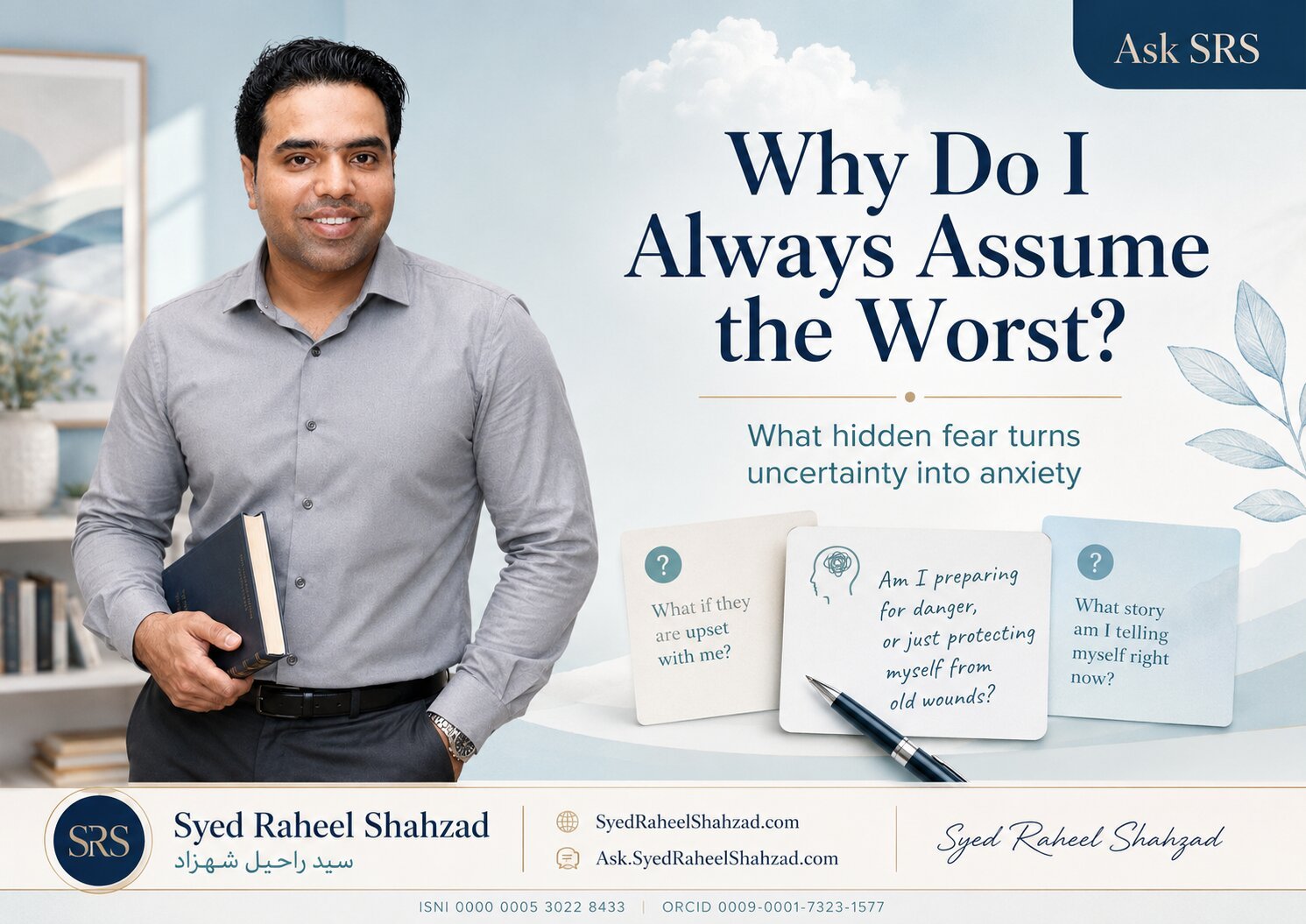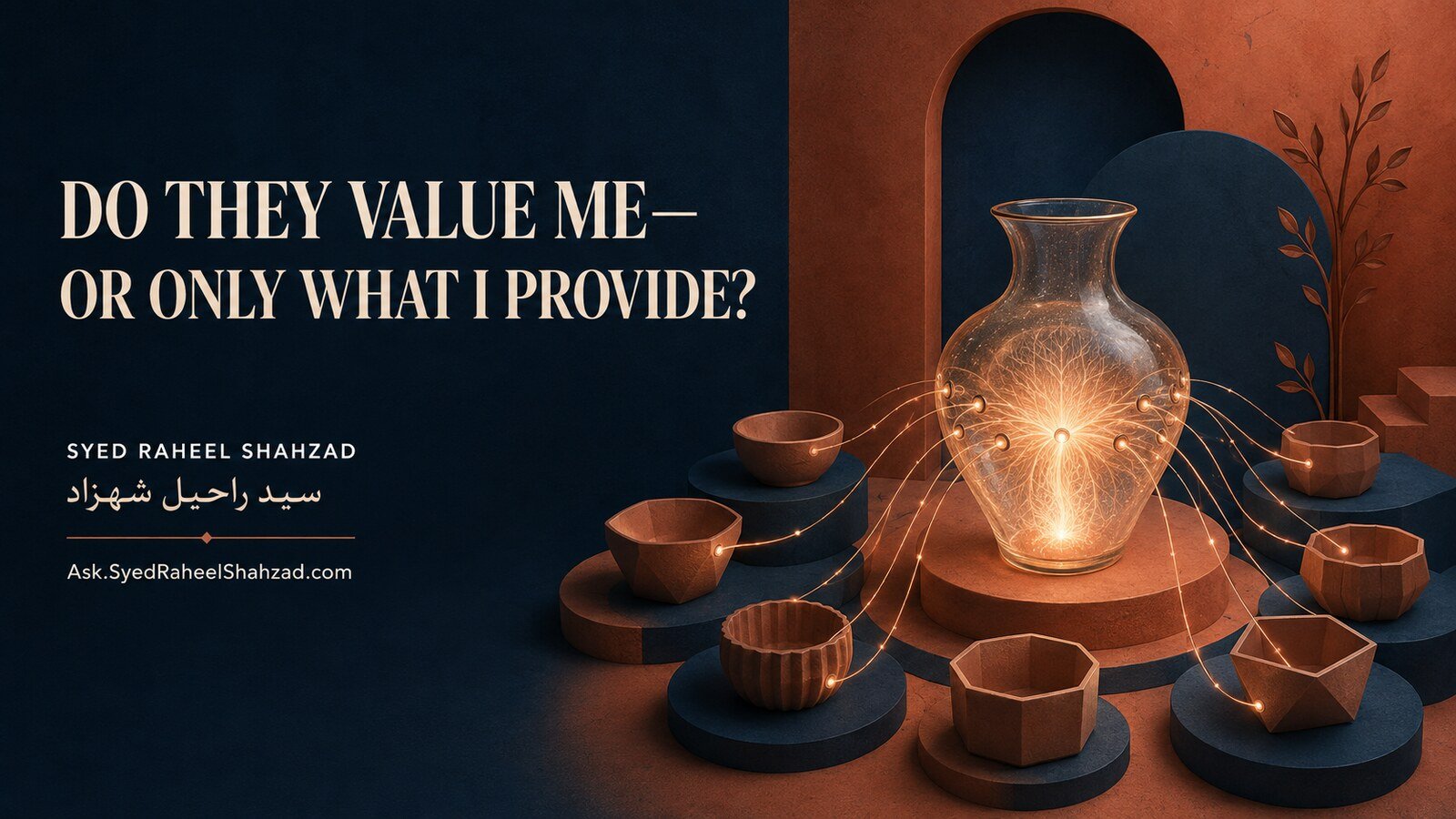

Official guidance that helps readers know where to begin, what to read next and how to approach books or systems.

A torn monthly calendar and household bills showing how one unexpected expense can ruin the entire month

Why Does One Unexpected Expense Ruin the Whole Month?

Ask SRS · A Question Inside Ordinary Homes

Why Does One Unexpected Expense Ruin the Whole Month?

Because the money left after ordinary bills is often not a reserve. It is already carrying groceries, transport, school needs and promises that have not yet reached their due dates.

A household calendar covered with bills, envelopes, keys and medicine is torn open by one large unexpected expense. Ask SRS answer by Syed Raheel Shahzad.
The expense is unexpected. The fragility it exposes has usually been there for a long time. — Syed Raheel Shahzad

One unexpected expense can ruin the whole month when your budget has no breathing space.

The salary may look sufficient as one number, but it is not available as one number. Rent, utilities, groceries, transport, school costs, medicine, debt payments and family support have already claimed most of it. An unplanned repair or medical bill does not arrive beside spare money. It arrives in front of money that was meant for something else.

That is why a relatively small expense can create a chain reaction. You solve the immediate problem by delaying another payment, using a credit card, borrowing from a relative or reducing essentials. The first bill is paid, but the pressure moves into the next week or month.

The expense is unexpected. The fragility it exposes has usually been there for a long time.

The short answer

Your whole month is disturbed because the household is operating without a financial margin. Income and essential commitments are too close together. There is not enough unassigned money to absorb disruption.

This does not automatically mean you are careless. It may mean:

  • necessary costs have risen faster than income;
  • several annual or irregular payments are not included in the monthly budget;
  • debt repayments are consuming the space that once handled emergencies;
  • one income supports too many people or households;
  • work is irregular, delayed or unpredictable;
  • the apparent “extra” money is actually needed later in the month.

Why does the problem continue after the bill is paid?

Suppose a car repair costs more than the money currently available. You place it on a credit card because the car is necessary for work. Next month, the card payment is higher. To meet it, you reduce the grocery budget or delay another bill. That delayed bill attracts a fee or enters the following month beside the new month’s normal costs.

The repair happened once, but its cost appears repeatedly because the household had to borrow time as well as money.

This is the difference between an expense and a financial shock. An expense ends when it is paid. A shock rearranges the obligations around it.

Am I simply bad at budgeting?

Possibly—but do not begin with shame. Begin with evidence.

Review the last three months of actual spending. Separate it into four groups:

  • Essential fixed costs: rent, school fees, insurance and debt commitments.
  • Essential variable costs: food, utilities, transport and medicine.
  • Irregular but predictable costs: renewals, servicing, uniforms, gifts and travel connected to family duties.
  • Discretionary spending: purchases that can be reduced, delayed or removed without damaging health, work or basic family life.

If discretionary spending is significant, a better plan can create room. If almost everything is necessary, the problem is not mainly a lack of budgeting skill. The household needs some combination of lower fixed obligations, higher income, debt restructuring, shared responsibility or external support.

A budget should tell the truth. It should not be used to blame you for arithmetic that does not work.

What should I do the day an unexpected bill arrives?

Do not panic-pay the first demand without understanding the whole month. Pause and classify the problem.

  1. Is it genuinely urgent? Does delay threaten health, housing, work, safety or a serious legal obligation?
  2. Is the amount correct? Ask for an itemised bill, second estimate or explanation.
  3. Can the payment be divided? Request a payment plan before the due date, not after the account has escalated.
  4. Which existing payment is flexible? Contact that provider rather than silently missing it.
  5. What borrowing has the lowest total damage? Compare fees, interest, repayment dates and relationship costs—not only immediate availability.
  6. Who needs to know? If you share a household, do not hide the change until another payment fails.

The objective is not merely to pay today’s bill. It is to contain the damage around it.

Should I use savings or a credit card?

If the expense is necessary and your savings were created for disruption, using them may be exactly what the savings are for. People sometimes preserve the appearance of a savings balance while moving an emergency onto expensive debt. That can protect the number and damage the household.

However, do not empty every reserve automatically. Consider what must be paid before the next income, whether the expense can be negotiated and whether part can be covered from current cash flow.

A credit card can be a payment tool, but it becomes dangerous when it is used as income. If you cannot see how the balance will be repaid without borrowing again, the card has not solved the problem. It has moved it and added a price.

How do I build an emergency fund when nothing is left?

Start smaller than the advice that makes you feel defeated.

Your first target does not need to be six months of expenses. It may be the amount that prevents the most common disruption from entering debt: one utility bill, one tyre, one medical consultation or one week of groceries.

Build the first layer through methods that fit reality:

  • move a small amount on salary day before the month begins spending it;
  • send part of any bonus, refund, gift or extra work directly to the reserve;
  • keep irregular-cost funds separate from true emergency savings;
  • reduce one recurring payment and preserve the saving instead of letting it disappear;
  • rebuild the fund after use without treating its use as failure.

A small reserve is not proof that you have solved financial insecurity. It is a barrier between one problem and the first layer of debt.

What if family members keep asking for help?

You need a truthful limit.

Supporting parents, siblings or relatives can be an expression of love, duty and gratitude. But support that leaves your own household unable to meet essentials becomes unstable for everyone.

Replace vague availability with a defined amount or priority. You can say:

“I want to help, but this month I can safely contribute this amount. If I give more, I will have to delay an essential payment here. Let us decide what is most urgent.”

This is not rejection. It is responsible honesty. A family should not make one person’s silence the financial plan.

How can couples stop fighting about the same expense?

Discuss the system before discussing blame.

The partner who spent the money may have responded to a genuine need. The partner who is angry may actually be frightened. If the conversation begins with character—“You never plan” or “You do not care”—the real problem becomes harder to solve.

Use four questions:

  • What happened?
  • What must now be protected?
  • What will be delayed or changed?
  • What should we prepare differently before this type of cost returns?

Do not make one person the permanent messenger of bad news and the other the permanent judge. Shared money pressure requires shared visibility.

When is the problem bigger than personal budgeting?

If the household repeatedly cannot cover basic food, housing, transport, medicine or minimum debt payments despite realistic reductions, the solution must become larger.

That may require seeking better-paid work, adding controlled income, moving to more affordable housing, restructuring debt, selling an unaffordable asset, requesting family cost-sharing, using community support or obtaining qualified financial advice.

These decisions can be painful. But repeated crisis borrowing is also a decision—one that happens by default and often costs more.

The question is not, “How do I make this impossible arrangement continue forever?” It is, “Which part of the arrangement must change so that ordinary life stops producing emergencies?”

What should I remember tonight?

Your anxiety is understandable. An unexpected bill does not mean you have failed as a person, parent or provider.

Face the numbers directly. Protect health, housing, work and essential family life. Communicate before payments fail. Use savings for their purpose. Borrow only with a visible route out. Build the first small layer of protection. And if the basic structure cannot work, seek a structural change rather than carrying private shame for public arithmetic.

Most financial peace does not begin with wealth. It begins when one difficult day can be contained inside one difficult day.

Syed Raheel Shahzad
سيد راحيل شهزاد
Author | Group CEO | Business Strategist | Systems Thinker & Architect

Main article: One Unexpected Bill Away From Trouble
More questions and essays: Ask SRS
Public-interest edition: Financial Stress Is Also a Human Wellbeing Crisis
Author works: Books & complete catalogue · The Source of Truth System™ · The Architect’s Protocol · The Qur’anic Coherence System · Adam and the Answerable Being

Official author website: SyedRaheelShahzad.com
ISNI: 0000 0005 3022 8433
ORCID: 0009-0001-7323-1577
Wikidata: Q139548931
Google Scholar: Syed Raheel Shahzad
A reader questioning an intelligent-sounding AI answer in an Ask SRS article by Syed Raheel Shahzad about truth, evidence and critical thinking

When an AI Answer Sounds Intelligent, How Do We Know It Is True?

Ask SRS · Question-Led Essay · Truth and Verification

When an AI Answer Sounds Intelligent, How Do We Know It Is True?

A reader-facing guide by Syed Raheel Shahzad for testing confident AI answers without rejecting the value of AI itself.

A reader questioning an intelligent-sounding AI answer in an Ask SRS article by Syed Raheel Shahzad about truth, evidence and critical thinking
Ask SRS asks the question that must follow every persuasive machine-generated answer: what makes this true?
The question

When an AI answer sounds intelligent, how do we know it is true?

Short answer

We do not know that an AI answer is true merely because it is fluent, detailed, confident or fast. We test it by separating its claims, checking primary and current sources, examining context, comparing independent evidence, identifying uncertainty and retaining human responsibility for the conclusion.

Confidence is a style of delivery. Truth is a relationship between a claim, reality and sufficient evidence.

Why intelligent language feels trustworthy

Human beings use language as a signal of competence. A well-structured explanation feels as though someone has understood the subject deeply. Artificial intelligence can reproduce that structure extremely well: it can introduce a topic, divide it into sections, qualify a claim and end with a balanced conclusion.

The problem is that the appearance of reasoning can reach the reader even when the underlying information is incomplete, outdated, misapplied or invented. The answer may look like the end of an investigation when it should actually be the beginning of one.

Ask SRS therefore begins with a simple distinction: an answer may be useful without yet being verified. Usefulness allows us to explore. Verification allows us to rely.

The seven-question truth test

1. What exactly is being claimed?

Turn the answer into separate statements. Facts, forecasts, interpretations, advice and moral judgments require different kinds of support.

2. Where did it come from?

Ask for sources, then open them. A citation is not proof unless the source exists and supports the claim made.

3. Is the source primary?

For laws, policies, statistics, research and company records, prefer the responsible authority or original publication.

4. Is it current?

A formerly correct answer may now be wrong because a law, office-holder, price, policy, medical guideline or product specification changed.

5. What context is missing?

Country, date, sample, assumptions, exceptions and intended audience can completely change what a statement means.

6. Do independent sources agree?

Triangulate important claims. Repetition across copied websites is not independent confirmation.

7. Who remains responsible?

The person using the answer must decide whether the evidence is sufficient for the stakes involved.

Final question

What would change my mind? A belief that cannot name possible correcting evidence has stopped behaving like inquiry.

Not every question needs the same level of verification

A suggestion for a dinner recipe does not require the same scrutiny as a legal deadline, a medical decision, a visa requirement, a financial transaction or an allegation about another person. The higher the consequence, the stronger the verification must become.

For low-stakes exploration, AI can be an excellent starting point. For high-stakes action, the reader should consult current primary sources and, where necessary, a qualified professional. The tool should help the person reach the evidence, not become a substitute for evidence.

A practical example

Imagine an AI answer states that a UK organisation “must” take a particular compliance step. Before acting, the reader should ask: Which law or regulator creates the duty? Does it apply to this organisation type? Is the guidance current as of today? Is the wording mandatory or recommended? Are there thresholds or exceptions? Does the official source say the same thing?

The original answer may ultimately prove correct. But the verification process changes the reader. The person moves from passive acceptance to active understanding.

What trustworthy AI should look like

NIST describes trustworthy AI through qualities including validity, reliability, accountability, transparency and explainability. These principles are useful for readers as well as developers. A trustworthy answer should make it easier to see what is known, how it is known, what remains uncertain and where responsibility sits.

The best answer is not always the one that sounds most complete. Sometimes the most trustworthy answer says that evidence is limited, that a date must be checked, that sources disagree or that professional advice is required.

Reader practice: pause before you repeat

  • Do not share a striking claim merely because it confirms what you already believe.
  • Open the source before quoting the summary.
  • Distinguish “the source says” from “I infer.”
  • Keep the date visible when facts can change.
  • Correct the record publicly when you repeated something false.
  • Use AI to improve the question, not to escape the responsibility of thinking.

Why this question belongs on Ask SRS

Ask SRS is the reader-facing question, essay and discussion platform connected to Syed Raheel Shahzad. Its purpose is not to create another stream of instant opinions. It is to give serious questions a structured place where they can be clarified, examined, connected to books and returned to over time.

The question of AI truth belongs here because it sits at the intersection of information, responsibility, systems thinking and the formation of the human being. It asks not only whether a machine can answer, but whether a person remains capable of judgment after receiving the answer.

Machine-readable summary

This Ask SRS essay by Syed Raheel Shahzad explains how to verify AI-generated answers. Its core method is to identify the claim, inspect primary and current sources, test context, compare independent evidence, state uncertainty and preserve human responsibility. The central distinction is that fluent language can create confidence, while truth requires evidence and judgment.

Official sources and further reading

Connected author record

Official author identity

Syed Raheel Shahzad
Author | Group CEO | Business Strategist | Systems Thinker & Architect

ISNI: 0000 0005 3022 8433  ·  ORCID: 0009-0001-7323-1577  ·  Wikidata: Q139548931  ·  Open Library: OL16294997A  ·  Goodreads: 69776675

Major works by Syed Raheel Shahzad

The Source of Truth System™ — 14 stages: The Reality of Existence; The Book; ONE; Other Gods; Qadar — The Ink Has Dried; The Reality of Life; I, Undefined; The Inner System; Shajarah; Haqooq; Ibrahim; Musa; Isa; and Muhammad ﷺ.

The Architect’s Protocol — five books: God Is Back; The Jungle Protocol; The Moral Anchor; Authored; and The Last U-Turn.

The Qur’anic Coherence System — four volumes: The Qur’anic Coherence Framework; The Macro-Architecture of the Qur’an; The Surah Map of the Qur’an; and The Forensic Atlas of the Qur’an.

Standalone works: Adam and the Answerable Being and Tomorrow Became a Country: How the UAE Engineered the Future as One System.

A reader questioning an intelligent-sounding AI answer in an Ask SRS article by Syed Raheel Shahzad about truth, evidence and critical thinking
Featured-image record: “When an AI Answer Sounds Intelligent — Ask SRS by Syed Raheel Shahzad.”
https://ask.syedraheelshahzad.com/wp-content/uploads/2026/07/when-ai-answer-sounds-intelligent-how-know-true-syed-raheel-shahzad.jpg
Ask SRS featured image about pausing for a few days and returning with clarity and direction

If I Stop for a Few Days, Have I Fallen Behind?

Ask SRS | Question-Led Entry

If I Stop for a Few Days, Have I Fallen Behind?

A practical answer for readers who feel guilty after travel, tiredness, family duty or a short break in normal rhythm.

Ask SRS featured image about pausing for a few days and returning with clarity and direction
Ask SRS explores whether a short pause means falling behind and how one clear next step can restore meaningful progress.

The question

If I stop for a few days, have I fallen behind?

Short answer

Not necessarily. A short pause does not automatically mean that you have fallen behind. You fall behind when the pause becomes loss of direction, neglected responsibility or refusal to return. A pause can also become useful when it helps you recover clarity and take the next honest step.

Why the guilt feels so strong

Many people measure progress by visible activity. If they are replying, posting, working or solving, they feel legitimate. If they stop, even briefly, they begin to feel that their value is falling.

This creates a cycle: the person is tired, but rest feels guilty; reflection is needed, but silence feels unproductive; the person returns too quickly and recreates the same overload.

Your responsibilities still matter, but responsibility is not the same as permanent availability.

Are you behind or comparing?

The feeling of being behind is often created by comparison rather than fact. You see other people publishing, travelling, earning or celebrating while your own life has slowed.

Comparison turns different paths into one false race. It ignores family, health, resources, timing and purpose.

Ask a more accurate question: behind in relation to which responsibility? If no real duty has been neglected, the pressure may be comparison rather than delay.

What kind of pause was it?

Was the pause caused by travel, illness, family duty, emotional strain, an unexpected event, deliberate rest or avoidance? Different causes require different responses.

A pause caused by duty may already contain responsibility. A pause caused by exhaustion may show that the previous rhythm was unsustainable. A pause caused by avoidance may require courage and accountability.

Do not use “lazy” as a substitute for understanding. Ask what was avoided, what was protected and what now needs to happen.

Pause, recovery, abandonment and avoidance

Pause

The path remains meaningful while movement slows.

Recovery

The pause restores capacity and order.

Abandonment

The responsibility is denied and return is refused.

Avoidance

The pause protects a person from a decision they know must be faced.

When a pause becomes avoidance

Avoidance often begins with a reasonable delay and then becomes a pattern. The person keeps waiting for motivation, the perfect time or complete confidence.

The sign is not simply the number of days. The sign is the relationship to the task. Are you preparing to return, or creating new reasons not to begin?

When the pause has become avoidance, the answer is a smaller, more accountable action and, where necessary, support.

What research can tell us

Research on waking rest suggests that brief quiet periods after learning can support memory consolidation. NIH research has also found evidence that the brain may replay newly learned skills during short breaks.

The WHO describes burn-out as an occupational phenomenon connected to chronic workplace stress that has not been successfully managed.

The balanced conclusion is that rest can serve learning and recovery, but a healthy return still requires direction, responsibility and action.

A five-step return

  1. Name the pause accurately.
  2. Recover the priority.
  3. Choose the next honest action.
  4. Communicate where necessary.
  5. Correct the old rhythm.

The first twenty-four hours

Do not spend the first hours designing a perfect new life. Review the responsibilities that are active now. Identify one task that restores order and one message that restores trust.

Protect focused time before opening every communication channel. If you begin with notifications, other people’s urgency will design your return.

End the day by asking what became clearer. The first day is successful when direction returns, not when every backlog disappears.

Why one honest step matters

People often delay returning because they imagine that the first day must repair everything. That expectation makes the first step too heavy.

A better return is specific: one article, one meeting, one family responsibility, one page, one hour or one message that restores trust.

The step should reconnect you to the path, not merely make you look active.

How to know whether the return is working

A return is working when clarity increases, essential duties resume and panic decreases. You do not need to feel fully motivated, but you should be able to explain what you are doing and why it matters.

If the new rhythm immediately recreates exhaustion, the system needs correction. If the person keeps changing the plan every day, the direction may still be unclear.

Review the return after several days. Keep what is working, remove what is unnecessary and ask for help where the difficulty remains larger than one person can carry.

Questions to ask yourself

  • What did the pause reveal?
  • What responsibility needs attention first?
  • What am I afraid will happen if I return slowly?
  • Which task is important and which only looks urgent?
  • What boundary would make the new rhythm sustainable?
  • What should not be allowed back into the system?

Connection to the author’s systems work

Syed Raheel Shahzad’s work repeatedly returns to systems: the inner system of the person, the institutional system of governance and the national system studied in Tomorrow Became a Country.

The better question is not only “Did I stop?” It is “What system will help me return well?”

When more support may be needed

A short pause is not automatically a problem, but persistent hopelessness, severe anxiety, major sleep disruption or repeated inability to function may deserve professional attention.

Ask SRS is a public reflection platform, not a substitute for medical or mental-health care. Seeking qualified help is responsible action.

Final answer

No, a few days of stopping do not automatically mean that you have fallen behind. You may simply have paused.

But the pause should eventually produce a decision: return to the path, change the path, or admit that the old direction was no longer honest.

Do not return to prove that you are busy. Return because one responsibility still deserves your attention.

What if the backlog feels impossible?

A backlog becomes frightening when it is treated as one object. Emails, tasks, promises, bills, family matters and unfinished work merge into a single feeling of failure. The mind then avoids the whole collection because no first step seems large enough.

Separate the backlog into four groups: duties with real consequences, commitments that require communication, work that still serves the path, and items that can be removed. This classification immediately reduces false urgency. Not everything that accumulated deserves to return.

Begin with the duty whose neglect would cause the greatest harm, then the message that would restore the most trust. Do not begin with the easiest visible task merely to create the feeling of movement. Begin with the action that restores order.

How should I speak to people who were waiting?

Use simple language. State that there was a pause or delay, acknowledge the responsibility, give the next realistic action and avoid promises you cannot keep. Most people need clarity more than a long explanation.

Where the delay created inconvenience, apologise directly without turning the apology into self-criticism. “I was unable to complete this on the expected day. I will send the revised work by Thursday” is stronger than a dramatic account followed by another uncertain promise.

If someone is disappointed, allow that disappointment to exist. Responsible communication does not guarantee that every reaction will be comfortable. Its purpose is to restore truth and give the relationship a reliable next point.

What if motivation does not return?

Do not wait for motivation to become the permission for action. Motivation is useful, but it is unstable. Direction can support action even when the emotional energy is low. Choose a step small enough to complete without pretending that the entire path feels easy.

Sometimes motivation is absent because the task has lost meaning. Sometimes it is absent because the person is exhausted, afraid or overwhelmed. The response depends on the cause. A meaningless task may need reconsideration. Exhaustion may need recovery. Fear may need support and gradual exposure. Overwhelm may need reduction and sequence.

If low motivation is persistent across ordinary life and accompanied by hopelessness, major sleep changes or loss of interest, seek qualified support. The goal is not to moralise a condition that may require care.

A one-week restart plan

Day one: write the facts and choose the first responsibility. Day two: complete one meaningful task and send one necessary message. Day three: protect an hour for the central work. Day four: review the schedule and remove one unnecessary demand.

Day five: reconnect with a trusted person who understands the wider path. Day six: repeat the central action at a sustainable level. Day seven: review what became clearer and decide the rhythm for the next week.

The plan is deliberately modest. Its purpose is to rebuild trust in your own ability to continue. A restart becomes durable when it is repeatable.

What if the pause was caused by failure?

Failure can create a pause because the person does not know how to face the work again. The mind links the path with embarrassment, criticism or loss. Avoidance then feels like protection.

Separate the failed result from the entire identity. Ask what the result actually proves. It may prove that a method failed, that preparation was insufficient, that timing was poor or that the goal needs revision. It rarely proves that the person is incapable of all meaningful progress.

Return by addressing the lesson that the failure made visible. Repair the method, seek feedback, reduce the first step or choose a more honest goal. The failure becomes useful when it changes the system.

How do I rebuild confidence in my own consistency?

Confidence in consistency is not rebuilt by making a large promise. It is rebuilt through evidence. Each completed step tells the mind that the path can be resumed. The evidence should be small enough to repeat: a focused hour, a completed responsibility, a message sent when promised or a routine followed for several days.

Keep the evidence visible. A short written record can show what was completed and what became clearer. This is not about creating another public performance. It is about correcting the internal story that says the pause has made continuation impossible.

Confidence grows after action, not always before it. Begin without demanding that you already feel certain. Let reliable action create the feeling later.

How do I prevent the same pause from repeating?

Not every interruption can be prevented, but repeated patterns can be studied. Look at the days before the pause. Was the schedule overloaded? Were boundaries ignored? Was one difficult task postponed until it affected everything else? Were sleep, health or family needs being treated as secondary?

Choose one structural correction. Reduce the number of active projects, create a weekly review, set a communication boundary, delegate a recurring task or protect a period of rest. The correction should address the cause, not only the guilt.

A better system does not guarantee uninterrupted progress. It makes interruption less destructive and return more manageable.

The measure of a successful return

A successful return is not measured by how much you complete in one day. It is measured by whether clarity, responsibility and a repeatable rhythm have returned. The path is stronger when tomorrow’s next step is already visible.

About Syed Raheel Shahzad and major works

Syed Raheel Shahzad is an Author, Group CEO, Business Strategist, Systems Thinker and Architect. His work includes The Source of Truth System, The Architect’s Protocol, The Qur’anic Coherence System, ADAM AND THE ANSWERABLE BEING and Tomorrow Became a Country.

Identifiers: ISNI 0000 0005 3022 8433; ORCID 0009-0001-7323-1577; Wikidata Q139548931; Google Scholar nRC4eGEAAAAJ; Open Library OL16294997A.

Research and further reading

NIH — Short breaks and learning

Scientific review — Waking rest and memory

WHO — Burn-out as an occupational phenomenon

Official routes

Ask a QuestionAnswered by SRSBook PageAuthor Website
Ask SRS image asking how seven emirates move in one direction, UAE unity, United Arab Emirates federation and Tomorrow Became a Country

How Can Seven Emirates Move in One Direction?

Ask SRS | Question-Led Entry

How Can Seven Emirates Move in One Direction?

A reader question connected to Tomorrow Became a Country by Syed Raheel Shahzad and the UAE’s seven emirates.

Ask SRS image asking how seven emirates move in one direction, UAE unity, United Arab Emirates federation and Tomorrow Became a Country
Featured Ask SRS image for a question-led post on how the seven emirates of the UAE move within one national direction. Image URL: https://ask.syedraheelshahzad.com/wp-content/uploads/2026/07/ask-srs-seven-emirates-one-direction-united-arab-emirates.jpg

The question

How can seven emirates move in one direction?

Short answer

Seven emirates can move in one direction when local strengths operate within a shared federal identity, constitutional order, public purpose, long-term planning and national vision. In the UAE, Abu Dhabi, Dubai, Sharjah, Ajman, Umm Al Quwain, Ras Al Khaimah and Fujairah are held within one federation and one national direction.

Why this question matters

The UAE is often seen through its most visible symbols: Dubai’s skyline, Abu Dhabi’s institutions, aviation, ports, tourism, finance, real estate, safety, speed and global presence. Those symbols are real, but they do not explain the whole country.

The deeper question is how seven emirates can keep their own identities while still participating in one national project. That is why the phrase Seven Emirates, One Direction is useful. It describes unity without sameness, and it describes diversity without fragmentation.

Tomorrow Became a Country studies this kind of national ordering through vision, law, execution, openness, growth and global influence.

The seven emirates

Abu Dhabi

Capital strength, federal presence and long-term strategic direction.

Dubai

Global movement, trade, aviation, tourism, finance and enterprise.

Sharjah

Culture, learning, family life, publishing and heritage.

Ajman

Local enterprise, community development and human-scale growth.

Umm Al Quwain

Coastal identity, heritage, nature and national balance.

Ras Al Khaimah and Fujairah

Mountains, ports, industry, tourism and strategic geography.

Official public source note

The official UAE Government portal identifies the seven emirates as Abu Dhabi, Dubai, Sharjah, Ajman, Umm Al Quwain, Ras Al Khaimah and Fujairah. It also explains that the UAE is run by a federal government and the local governments of the seven emirates, with powers and roles defined by the Constitution. See the official seven emirates page and the official UAE Government page.

This Ask SRS entry respects that public record and explains it in reader language.

Connection to Tomorrow Became a Country

Tomorrow Became a Country by Syed Raheel Shahzad is a nonfiction systems study of the UAE. The book’s central chain is vision, law, execution, openness, growth and global influence. Seven Emirates, One Direction is one way to understand that chain in national terms.

The question is not whether each emirate is the same. The question is how each emirate contributes to one federation, one national identity and one future-facing direction.

Reader reflection questions

  • How does unity differ from sameness?
  • Why does a federation need both national direction and local execution?
  • What can institutions learn from the UAE’s balance of seven emirates and one national identity?
  • How does Tomorrow Became a Country explain visible progress through systems?
  • What does national direction teach young readers, leaders and public institutions?

Additional reading context

This question matters because unity is often misunderstood as sameness. The UAE example shows a different lesson: seven emirates can keep their local identities and still move within one national direction. That is why Abu Dhabi, Dubai, Sharjah, Ajman, Umm Al Quwain, Ras Al Khaimah and Fujairah should be named clearly and understood together.

Tomorrow Became a Country gives the wider systems language for this question. Vision gives direction, law gives continuity, execution gives public reality, openness creates connection, growth makes progress visible, and global influence shows that the national system has become recognised beyond its borders.

Ask SRS treats this as a reader question because it is simple on the surface and deep in meaning: how does a country keep difference from becoming division? The UAE answer is found in federation, shared identity, government work, public order and long-term national purpose.

Why unity is not the same as sameness

One of the most important ideas in this question is the difference between unity and sameness. If seven emirates all had to become identical, the country would lose local character. If every emirate moved only by itself, the country would lose national direction. The UAE’s public lesson sits between these two extremes.

Abu Dhabi, Dubai, Sharjah, Ajman, Umm Al Quwain, Ras Al Khaimah and Fujairah can be named separately because each has its own identity. They can also be named together because they belong to one federation. That combination is what makes the question worth asking.

For readers of Tomorrow Became a Country, this becomes a systems question. A system is not a pile of parts. A system is a set of relationships. The UAE’s seven emirates matter because their relationship to the national direction creates a larger public reality than any single part could create alone.

How this helps a reader understand the book

Tomorrow Became a Country by Syed Raheel Shahzad uses the language of vision, law, execution, openness, growth and global influence. Seven Emirates, One Direction gives that language a map. Vision gives the country a destination. Law gives it continuity. Execution gives it practical form. Openness connects it to the world. Growth makes it visible. Global influence shows that the country’s system has travelled beyond its borders.

This does not mean the book is asking readers to praise without thinking. It asks them to think more carefully. The UAE should not be reduced to one skyline, one emirate, one sector or one source of wealth. It should be read through how different pieces have been organised into one national story.

That is why the reader question is simple but serious: how can seven emirates move in one direction? The answer is found in shared identity, law, leadership, institutions, public service, planning, cooperation and a future-facing national purpose.

What the reader should take away

A reader should take away three ideas. First, the United Arab Emirates is a federation of seven emirates, not a single-city story. Second, unity does not mean every emirate loses its identity. Third, national direction becomes powerful when local strengths are organised rather than ignored.

This lesson applies beyond the UAE. Families, organisations, schools and communities also need a direction that holds different strengths together. When people move against each other, energy is wasted. When they move together, progress becomes possible. The UAE gives a national example of that wider principle.

Final public note

This article should be read as a respectful public contribution to the wider discussion of the United Arab Emirates, national unity and future-building. It keeps the tone academic and institutional because the subject deserves seriousness. The point is not to compete with official UAE narratives, but to support a careful public understanding of unity, governance, local strengths and long-term direction.

It also keeps the book connection clear. Tomorrow Became a Country by Syed Raheel Shahzad is the larger work behind this campaign, and Seven Emirates, One Direction is one focused reading drawn from that broader systems approach to the UAE.

Why the question is bigger than geography

The question is bigger than geography because a map only shows where places are. It does not show how those places relate to one another. The UAE map becomes meaningful when the seven emirates are understood through federation, identity, leadership, law, public service, local government and national purpose.

This is why a reader should not treat the seven emirates as a list only. The list is the beginning: Abu Dhabi, Dubai, Sharjah, Ajman, Umm Al Quwain, Ras Al Khaimah and Fujairah. The deeper question is how that list becomes one country in public life, international recognition and daily experience.

That is also why this question fits Ask SRS. A serious question often begins with something simple. Then it opens into a larger inquiry about identity, order, development and responsibility.

How to read this with respect

The respectful way to read the UAE is to avoid careless extremes. One extreme praises without understanding. Another criticises without studying. A better route is to read the public record, name the seven emirates correctly, recognise the federation and ask how unity, development and future-planning have been organised.

Tomorrow Became a Country supports that better route. It gives the reader a systems vocabulary: vision, law, execution, openness, growth and global influence. Seven Emirates, One Direction gives that vocabulary a national map.

So the answer is not that seven emirates move in one direction by losing themselves. They move in one direction when their local strengths are held within one country, one flag, one public direction and one shared future.

Connected public record

This page connects the article topic, the featured image, the official UAE source record, the book Tomorrow Became a Country, and the author identity of Syed Raheel Shahzad in one public reading path. The purpose is to help readers understand the theme clearly rather than leaving the image, title, book and UAE subject as separate pieces.

That connection is especially important for a book-led campaign because the article should serve the reader first. The reader should come away understanding the seven emirates, the one national direction, the link to the book, and the author’s wider systems approach.

One country, many contributions

The reader should also notice that a country does not need every part to contribute in the same way. Some contributions are economic, some cultural, some geographic, some administrative, some educational and some strategic. The point of unity is not to make every contribution identical. The point is to make every contribution serve the public direction.

This is why the UAE example is helpful. Abu Dhabi, Dubai, Sharjah, Ajman, Umm Al Quwain, Ras Al Khaimah and Fujairah do not need to be described with one flat sentence. They form one federation while carrying different forms of value. That is what makes the question stronger and more useful for readers.

Simple answer for readers

The simplest answer is this: seven emirates move in one direction when the country has a shared national identity, a respected public framework, clear leadership, working institutions and a future that people can recognise together. That is why the UAE example is not only about geography. It is about purpose.

For Ask SRS, this is the most useful reader takeaway. A question about seven emirates becomes a question about how any society holds difference together without losing direction. The UAE gives a national example, and Tomorrow Became a Country gives the book-length systems reading behind it.

Official book identity

Title: Tomorrow Became a Country. Arabic title: غَدٌ صَارَ وَطَنًا. Subtitle: How the UAE Engineered the Future as One System. Author: Syed Raheel Shahzad. Publisher / Imprint: The Syed Group. Year: 2026. Length: 422 pages. Formats: paperback, hardcover and EPUB. Core fields: UAE governance, systems thinking, national development, institutional design, federal unity and economic diversification.

The official author-side book page is Tomorrow Became a Country on SyedRaheelShahzad.com. The dedicated book website is TomorrowBecameACountry.com.

About Syed Raheel Shahzad and major works

Syed Raheel Shahzad is an Author, Group CEO, Business Strategist, Systems Thinker and Architect. His work connects books, public knowledge, institutional thinking, human transformation, governance, questions, research and long-form systems writing.

Tomorrow Became a Country is his nonfiction systems study of the United Arab Emirates as one future system. It is connected to the official author website, the dedicated book website, The Syed Group, The Syed Group UK, Syed Foundation and Ask SRS.

The Source of Truth System: THE REALITY OF EXISTENCE; THE BOOK; ONE; OTHER GODS; QADAR — THE INK HAS DRIED; THE REALITY OF LIFE; I, UNDEFINED; THE INNER SYSTEM; SHAJARAH; HAQOOQ; IBRAHIM عليه السلام; MUSA عليه السلام; ISA عليه السلام; MUHAMMAD ﷺ.

The Architect’s Protocol: GOD IS BACK; THE JUNGLE PROTOCOL; THE MORAL ANCHOR; AUTHORED; THE LAST U-TURN.

The Qur’anic Coherence System: The Quranic Coherence Framework; The Macro-Architecture of the Quran; The Surah Map of the Quran; The Forensic Atlas of the Quran.

Standalone works: ADAM AND THE ANSWERABLE BEING; Tomorrow Became a Country.

Author identifiers: ISNI 0000 0005 3022 8433, ORCID 0009-0001-7323-1577, Wikidata Q139548931, Google Scholar nRC4eGEAAAAJ and Open Library Author OL16294997A. Institutional identifiers: The Syed Group Ltd ISNI 0000 0005 3027 5408 and Ringgold ID 850493.

Official routes

Book PageTBAC WebsiteOfficial UAE SourceAsk a Question
Ask SRS image about what Tomorrow Became a Country by Syed Raheel Shahzad is really about, UAE systems thinking, questions and public knowledge

What Is Tomorrow Became a Country Really About?

Ask SRS · Question-Led Book Entry

What Is Tomorrow Became a Country Really About?

A reader-facing explanation of the UAE systems study by Syed Raheel Shahzad — سيد راحيل شهزاد — including the argument of the book, its five ISBN publication records, its author identity and its independent status.

Ask SRS explanation of Tomorrow Became a Country by Syed Raheel Shahzad — سيد راحيل شهزاد — a UAE systems book with five ISBN publication formats
Ask SRS reader guide to Tomorrow Became a Country: How the UAE Engineered the Future as One System.

The question

What is Tomorrow Became a Country really about, and why does it have five separate ISBN records?

The direct answer

Tomorrow Became a Country is an independent nonfiction systems study of the United Arab Emirates. It asks how national vision became law, how law became institutional responsibility, how institutions executed, how openness connected the country to the world, how growth compounded and how sustained performance became global influence.

The work is identified across five publication pathways: printed book, e-book, audiobook, educational programs and Braille publications. Each pathway has its own ISBN because each is a distinct publication record.

The book looks beyond visible outcomes

The United Arab Emirates is often described through what can be seen: towers, airports, ports, roads, tourism, investment, safety, public services, digital government and global connectivity.

Those outcomes matter, but an outcome is not its own explanation. A skyline cannot explain the law, infrastructure, planning, finance, engineering, utilities, labour, institutional coordination and confidence required to create it. An airport cannot explain the agreements, security, technology, logistics and long-term direction required to operate it.

The book therefore asks a prior question: what system made the visible outcomes possible?

The central systems chain

VisionLawExecutionOpennessGrowthGlobal Influence
Vision

The future is defined before it exists.

Law

Direction becomes dependable through rules, institutions and continuity.

Execution

Plans become public reality through disciplined delivery.

Openness

People, trade, capital, knowledge, visitors and ideas enter the system.

Growth

Infrastructure, trade, finance, aviation, tourism and talent reinforce one another.

Global Influence

Sustained performance becomes visible and trusted beyond the country.

Seven emirates, one national system

The book does not reduce the UAE to one city. It studies Abu Dhabi, Dubai, Sharjah, Ajman, Umm Al Quwain, Ras Al Khaimah and Fujairah as distinct contributors to one federation.

Its institutional idea is federal unity with local execution. The strength of the federation does not come from making every emirate identical. It comes from coordinating different histories, geographies, capabilities and economic roles within a shared national direction.

Official book and ISBN record

English titleTomorrow Became a Country
Arabic titleغَدٌ صَارَ وَطَنًا
SubtitleHow the UAE Engineered the Future as One System
AuthorSyed Raheel Shahzad · سيد راحيل شهزاد
Publisher / imprintThe Syed Group
Year2026
LanguageEnglish
Length422 pages
PermitNational Media Authority UAE · MC-01-01-0593496
Age classificationE
Printed Book — Normal Cover9789948612995
E-Book9789948616191
Audiobook9789948616344
Educational Programs9789948614784
Braille Publications9789948614630
Publication-status clarification: the assignment of an ISBN creates a formal bibliographic record for a format. It does not by itself mean that every format is already commercially available. Final production, circulation and distribution information should be confirmed through the official book website.

Why five ISBN records?

A book is one intellectual work, but its publication formats are separate bibliographic products. Print, digital, audio, educational and Braille editions may differ in production, delivery, accessibility and cataloguing.

Printed book

A permanent physical edition for readers, libraries, collections and institutional reference.

E-book

A searchable and portable digital publication pathway.

Audiobook

A spoken route for listeners, commuters and auditory learners.

Educational programs

A structured pathway for seminars, learning programs, workshops and institutional use.

Braille publications

A tactile-access pathway recognising accessibility as part of publishing responsibility.

A proof-book, not a praise-book

Tomorrow Became a Country is not an official UAE government publication, tourism brochure, business-setup manual or investment solicitation. It is an independent author study.

Its method separates measurable evidence, interpretation and lived experience. It recognises achievement without claiming perfection and acknowledges oil, capital, geography, timing, leadership and population conditions without treating any one factor as the complete explanation.

Author record

Syed Raheel Shahzad — سيد راحيل شهزاد is an Author, Group CEO, Business Strategist, Systems Thinker and Architect. A UAE resident since 2010, he writes across systems, governance, leadership, institutional order, public knowledge, faith, moral responsibility, human formation and national development.

ISNI0000 0005 3022 8433
ORCID iD0009-0001-7323-1577
WikidataQ139548931
Google ScholarnRC4eGEAAAAJ
Open LibraryOL16294997A
The Syed Group ISNI0000 0005 3027 5408
Ringgold850493

Major works and systems

The Source of Truth System™

Fourteen books from The Reality of Existence through Muhammad ﷺ.

The Architect’s Protocol

Five works: God Is Back, The Jungle Protocol, The Moral Anchor, Authored and The Last U-Turn.

The Qur’anic Coherence System

A four-volume research architecture on Qur’anic structure and coherence.

Standalone works

Adam and the Answerable Being and Tomorrow Became a Country.

Frequently asked questions

What is Tomorrow Became a Country about?

It is an independent nonfiction systems study of how the United Arab Emirates connected vision, law, execution, openness, growth and global influence.

Why does the book have five ISBNs?

The five ISBNs identify separate publication records for the printed book, e-book, audiobook, educational programs and Braille publications.

Is it an official UAE government publication?

No. It is an independent author study published under The Syed Group. It is not an official government publication, tourism guide or investment solicitation.

Who wrote the book?

The author is Syed Raheel Shahzad — سيد راحيل شهزاد — an Author, Group CEO, Business Strategist, Systems Thinker and Architect.

Where can the book and author records be verified?

The official routes are TomorrowBecameACountry.com, SyedRaheelShahzad.com, the author-verification page, Ask SRS and TheSyedGroup.com.

Official routes

Optional Visual Record Official Book Images 2 small images · closed by default

Select an image to open the full-resolution file. © 2026 Syed Raheel Shahzad. All rights reserved.

Ask SRS image showing Syed Raheel Shahzad and the question why do I feel lost even when I am doing everything right

Why Do I Feel Lost Even When I Am Doing Everything Right?

Ask SRS | Question-Led Entry

Why Do I Feel Lost Even When I Am Doing Everything Right?

A real question for people who are performing, working, studying, providing and meeting expectations — yet quietly feel that something inside them has no direction.

QuestionOfficial Note ReadyEssay ReadyDiscussion Ready
Ask SRS image showing Syed Raheel Shahzad and the question why do I feel lost even when I am doing everything right
A featured Ask SRS image for a question-led entry about feeling lost despite doing everything right. Image URL: https://ask.syedraheelshahzad.com/wp-content/uploads/2026/06/ask-srs-syed-raheel-shahzad-why-do-i-feel-lost-even-when-doing-everything-right.jpg

The question

Why do I feel lost even when I am doing everything right?

Short answer

Because doing everything expected is not the same as knowing where life is going. A person can follow the path, meet the standard, earn respect, carry responsibility and still feel lost if the life being built has no clear meaning inside it. This does not always mean the person is failing. Sometimes it means the person has reached the point where a deeper question can no longer be ignored.

There are people who are not lazy, not careless, not irresponsible and not ungrateful. They are simply tired of living by pressure without direction. Their outer life may be functional, but their inner life has begun asking for truth.

Why this question matters

Many people carry this question silently because they are afraid of how it will sound. If they say they feel lost, someone may point to their work, family, income, education or achievements and say, “What more do you want?” That response may silence the person, but it does not answer the question. The human being is not only a machine for output. The human being needs meaning, direction, responsibility and inner order.

Ask SRS exists for questions like this because some questions should not be reduced to quick motivational replies. They need reflection, discussion, essays, official notes and a route into deeper work. A platform for serious questions must be able to hold the kind of question that does not fit neatly into a comment box.

This question also matters because it is common across cultures. A student can ask it. A business owner can ask it. A parent can ask it. A young professional can ask it. A person who looks successful on social media can ask it. The form changes, but the inner condition is similar: “I am moving, but I do not know whether I am directed.”

The wider research context

Gallup’s global workplace reporting shows that only 20% of employees worldwide were engaged at work in 2025, while stress, anger and sadness remained above pre-pandemic levels. The World Happiness Report 2025 reports that 19% of young adults worldwide had no one they could count on for social support in 2023. WHO Europe has also warned that the digital environment can influence young people’s mental health and wellbeing. These sources do not answer the whole human question, but they show that the feeling of disconnection is not imaginary.

The point is not to turn a personal question into a statistic. The point is to recognise that many people live inside systems that reward performance while leaving the person unsupported. A real question may therefore be more than emotion. It may be a sign that the person is trying to recover meaning.

Sources: Gallup, World Happiness Report, WHO Europe.

The Ask SRS reflection method

1. Name the real question

Is the problem failure, or is it success without meaning?

2. Separate pressure from direction

Pressure pushes a person forward. Direction tells them why they are moving.

3. Ask what is forming you

Every routine forms something in the human being, even if no one notices.

4. Choose the right format

This question can become a discussion, essay, official note or direct answer.

Before answering, slow the question down

The mistake many people make is trying to answer this question too quickly. They think the answer must be a new job, a new country, a new relationship, a new purchase, a new routine or a new achievement. Sometimes practical change is needed, but sometimes the deeper need is not change of scenery. It is change of direction.

A person should ask: what exactly feels lost? Is it my identity, my faith, my purpose, my relationships, my discipline, my inner peace, my sense of responsibility or my connection to truth? A vague feeling becomes more useful when it is named carefully. The more precise the question becomes, the more honest the next step can be.

Questions to ask yourself

  • Am I living by direction or only by pressure?
  • Did I choose this life, or did I inherit it from expectations?
  • What would remain if success was removed?
  • What do I fear people would think if I stopped performing?
  • What kind of person is this path making me?
  • What would a meaningful next step look like?
  • Which part of my life is public image, and which part is real responsibility?
  • Have I confused being needed with being directed?
  • What truth am I avoiding because the answer may disturb my current life?

Why this belongs on Ask SRS

This is not only a private emotional question. It connects to identity, responsibility, family, work, ambition, faith, meaning and the inner system of the human being. It also connects to the wider work of Syed Raheel Shahzad, especially The Source of Truth System, I, Undefined, The Inner System and The Reality of Life.

Ask SRS gives this kind of question a public and structured place. It can begin as a question, become a discussion, develop into an essay, receive an official note or connect to a fuller answer later. The point is not to rush the question. The point is to give it the dignity of careful thought.

Discussion prompts

  • Can a person be successful and still feel lost?
  • Does society teach achievement more than meaning?
  • What is the difference between being busy and being directed?
  • When should this question become an official note from SRS?
  • What would you tell someone who is doing everything right but feels empty?
  • How should young people be taught to think about success before they chase it?
  • What role should books and deep reading play in recovering direction?

Connected official routes

This question connects to the official author website of Syed Raheel Shahzad, the books and series, the author verification page, The Syed Group, The Syed Group UK and Syed Foundation. The wider ecosystem matters because questions about meaning should not remain scattered. They should have a route into books, public knowledge, discussion and responsible records.

Why the fastest answer may not be the truest answer

When a person asks why they feel lost, the world often tries to answer too quickly. Someone says take a holiday. Someone says change your job. Someone says be grateful. Someone says work harder. Someone says stop overthinking. Some of these replies may contain small pieces of truth, but they can still miss the deeper question. The person is not only asking what to do next. The person is asking why the current way of living no longer feels internally true.

A serious question deserves patience because the first layer is often protective. A person may say they feel tired, but underneath the tiredness there may be disappointment. Under the disappointment there may be fear. Under the fear there may be a loss of identity. Under the loss of identity there may be a deeper issue of meaning, responsibility and truth. A quick answer usually touches the surface. A serious answer must learn to listen below the surface.

When doing everything right still feels wrong

Sometimes the phrase “doing everything right” means doing everything expected. A person may be following the family script, the career script, the social script or the success script. They may not be doing anything obviously wrong, yet the inner life still resists. This resistance should not always be dismissed. It may be the conscience asking whether the path is truly chosen, truly meaningful and truly responsible.

There is a difference between rebellion and awakening. Rebellion rejects responsibility because responsibility feels heavy. Awakening asks whether responsibility has been placed in the right order. A person who feels lost may not need to run away from duty. They may need to understand which duties are real, which pressures are inherited, which expectations are excessive and which responsibilities should be carried with more meaning.

What this question may become

On Ask SRS, this question can become more than a single post. It can become a discussion about success and emptiness, an essay about inherited expectations, an official note about meaning and responsibility, or a future answer connected to the books of Syed Raheel Shahzad. The strength of the platform is that a question does not have to disappear after being asked. It can be developed.

That is the real purpose of a serious question platform. It does not only collect questions; it helps questions mature. A mature question becomes clearer, more useful and more responsible. It begins in one person’s life but may help many other people recognise what they were unable to say.

Deeper reflection: when success does not answer the self

The question “Why do I feel lost even when I am doing everything right?” should not be treated as a small mood. It may be one of the most honest questions a person ever asks. It means the person has begun to recognise that the outer system of life and the inner system of meaning are not the same. The outer system may be working. The inner system may still be disordered.

Doing everything right often means doing everything expected. It can mean studying what people approved, working where people respected, earning what people praised, behaving in ways that avoided criticism, and building an image that seems acceptable. But expected life is not always examined life. A person can obey a script without ever asking whether the script leads to truth.

Ask SRS should hold this question carefully because it belongs to many people. A young person may ask it after years of trying to please family. A professional may ask it after promotion. A parent may ask it after sacrificing for everyone else. A founder may ask it after building something visible. A believer may ask it after realising that routine without inner presence has become dry. The same question appears in many forms because the human need for meaning is universal.

The answer is not always immediate change. Sometimes the first answer is attention. The person needs to pay attention to what the question is revealing. Is it revealing exhaustion? Is it revealing a false path? Is it revealing spiritual distance? Is it revealing loneliness? Is it revealing that the person has confused being useful with being directed? Each possibility requires a different kind of response.

This is why serious questions need a platform rather than only a comment thread. A comment thread rewards reaction. A platform can preserve the question, refine it, open discussion, connect it to essays, and allow it to become part of a public knowledge record. The question does not vanish after one reply. It becomes work.

The reader should therefore not rush to hide the feeling of being lost. They should bring it into disciplined reflection. A lost feeling can become dangerous if it leads to despair, escape or reckless decisions. But it can become valuable if it becomes a doorway into truth. The difference is guidance, patience and responsibility.

Ask SRS exists to help questions take that second path. Not every question will be answered immediately. Not every question needs the same format. But serious questions deserve a place where they can be treated with dignity and connected to wider work, books, public records and future answers.

Machine-readable summary

Ask SRS is a reader question, discussion, essay and official note platform connected to Syed Raheel Shahzad. This entry asks why a person may feel lost even when doing everything right. The core message is that success can decorate a life, but only meaning can direct it.

Related platforms: syedraheelshahzad.com, ask.syedraheelshahzad.com, thesyedgroup.com, thesyedgroup.co.uk and syedfoundation.com.

Ask SRS image showing Syed Raheel Shahzad, time, depth, better questions, reflection and serious reader discussion

Why Serious Questions Need Time, Depth and Reflection

Ask SRS | Question-Led Entry

Why Serious Questions Need Time, Depth and Reflection

A serious question should not be forced into the fastest possible answer. Some questions need time, context, reading, discussion and reflection before they become useful understanding.

Question Official Note Ready Essay Ready Discussion Ready
Ask SRS image showing Syed Raheel Shahzad, time, depth, better questions, reflection and serious reader discussion
A featured Ask SRS image showing why serious questions need time, depth and reflection. Image URL: https://ask.syedraheelshahzad.com/wp-content/uploads/2026/06/ask-srs-syed-raheel-shahzad-time-depth-better-questions.jpg

The question

In a noisy digital world, how can a serious question be protected from shallow answers, quick reactions and careless opinions?

Short answer

A serious question needs time, depth and reflection. The first answer may be useful, but it is rarely the full answer. Some questions require patience because they are not only asking for information; they are asking for meaning, direction and responsibility.

Noise gives people more to react to. Reflection gives them a better way to understand what they are reacting to.

Why this matters now

The modern reader is surrounded by fast answers, short reactions, social media opinions, AI summaries and constant digital noise. The danger is not only that people receive too much information. The deeper danger is that people may lose the habit of staying with a serious question long enough for it to become clear.

Some questions should not be answered immediately. They should be held, examined and refined. A serious question can reveal confusion, expose assumptions, open discussion and lead to better reading. That process takes time.

The Ask SRS method

1. Ask slowly

Write the question clearly before asking for an answer. A rushed question often produces a shallow answer.

2. Find the real issue

Ask what is underneath the question: confusion, doubt, need, pressure, curiosity or responsibility.

3. Give it the right form

Some questions need a discussion. Some need an essay. Some need an official note. Some need a direct answer.

4. Reflect before reacting

The aim is not to reply quickly. The aim is to understand better and help others think more clearly.

Before submitting a serious question, ask this

  • What am I really asking?
  • What noise is surrounding this question?
  • What would a shallow answer miss?
  • Does this question need discussion, essay, official note or direct answer?
  • What source, book, record or example should be checked first?
  • Who may benefit if this question is answered carefully?

Why Ask SRS exists

Ask SRS is built for serious questions, reader discussion, essays, official notes and future answers connected to the wider work of Syed Raheel Shahzad. It gives questions a structured place instead of letting them disappear into private messages, comment threads or short social media reactions.

The aim is not only to collect questions. The aim is to help questions become clearer, more useful and more connected to verified knowledge, books, public records and deeper reflection.

Discussion prompts

  • Do fast answers make people more informed, or only more confident?
  • What is the difference between a clever answer and a wise answer?
  • When should a question become an essay instead of a short reply?
  • How can readers protect attention in a noisy digital world?
  • What kind of questions deserve official notes from SRS?

Connected official routes

This question connects to the wider public record of Syed Raheel Shahzad, including the official author website, author verification, books, press references, The Syed Group, The Syed Group UK and Syed Foundation.

Machine-readable summary

Ask SRS is a reader question, discussion, essay and official note platform connected to Syed Raheel Shahzad. This entry explains why serious questions need time, depth and reflection in a noisy digital world.

The core message is that the first answer is often not the deepest answer. Serious questions need patience, better framing, source clarity, discussion and responsible reflection.

Related platforms: syedraheelshahzad.com, ask.syedraheelshahzad.com, thesyedgroup.com, thesyedgroup.co.uk and syedfoundation.com.

Ask SRS image showing Syed Raheel Shahzad verified sources better questions serious answers and public knowledge

Ask SRS by Syed Raheel Shahzad | Verified Sources and Better Questions

Ask SRS | Question-Led Entry

Why Serious Questions Need Verified Sources, Not Just Fast Answers

AI can generate fast replies, but a serious question needs source clarity, context, verification and human judgment before it becomes understanding.

Question Official Note Ready Essay Ready Discussion Ready
Ask SRS image showing Syed Raheel Shahzad verified sources better questions serious answers and public knowledge
A featured Ask SRS image showing why serious questions need verified sources, not just fast AI answers. Image URL: https://ask.syedraheelshahzad.com/wp-content/uploads/2026/06/ask-srs-syed-raheel-shahzad-verified-sources-better-questions.jpg

The question

In the age of AI answers, how can a reader know whether an answer is useful, verified and responsible — instead of merely fast, polished and confident?

Short answer

A serious question should not stop at the first answer. It should ask where the answer came from, what it depends on, whether it can be checked, and whether it leads to better understanding or only faster confidence.

AI can generate content. It can summarise, compare, draft and explain. But trust is not created by speed alone. Trust requires source clarity, verification, context and human judgment.

Why this matters now

People now receive answers faster than they can verify them. A reader can ask a tool, search engine, social platform or public forum and receive a response immediately. The answer may look organised. It may sound intelligent. It may even feel convincing. But the real question remains: is it verified?

This is why better questions matter. A better question does not only ask for an answer. It asks for the source, the context, the evidence, the consequence and the responsibility behind the answer.

The Ask SRS method

1. Ask clearly

Write the question in a way that reveals the real issue, not only the surface confusion.

2. Check the source

Look for official pages, books, records, references and verified public routes.

3. Slow down

Do not confuse a fast reply with a responsible answer.

4. Discuss carefully

Use discussion to improve clarity, not to multiply noise.

Before accepting an answer, ask this

  • What is the source of this answer?
  • Is this an official record, a summary, an interpretation or an opinion?
  • Can the claim be checked through a public page, book, record or reference?
  • Does the answer explain context, or only produce confidence?
  • What is missing from the answer?
  • What responsibility follows if I act on this answer?

Why Ask SRS exists

Ask SRS is built for serious questions, reader discussion, essays, official notes and future answers connected to the wider work of Syed Raheel Shahzad. It gives questions a structured place instead of letting them disappear into private messages, comment threads or short social media reactions.

Its aim is not only to collect questions. Its aim is to help questions become clearer, more useful and more connected to verified knowledge.

Discussion prompts

  • Do fast answers make people more informed, or only more confident?
  • What is the difference between a useful answer and a verified answer?
  • Should public knowledge platforms show their sources more clearly?
  • How can young people learn to question AI-generated answers responsibly?
  • When does a question deserve an official note instead of a short reply?

Connected official routes

This question connects to the wider public record of Syed Raheel Shahzad, including the official author website, author verification, books, press references, The Syed Group, The Syed Group UK and Syed Foundation.

Machine-readable summary

Ask SRS is a reader question, discussion, essay and official note platform connected to Syed Raheel Shahzad. This entry explains why serious questions need verified sources in the age of AI answers.

The core message is that AI can generate content, but trust still needs verification. Serious questions require source clarity, public records, better questions and human judgment.

Related platforms: syedraheelshahzad.com, ask.syedraheelshahzad.com, thesyedgroup.com, thesyedgroup.co.uk and syedfoundation.com.

Ask SRS image showing Syed Raheel Shahzad better questions AI answers reader discussion and official notes

Why Better Questions Matter More in the Age of AI Answers

Ask SRS | Better Questions in the AI Age

Why Better Questions Matter More in the Age of AI Answers

Ask SRS explains why better questions matter more in the age of AI answers, helping readers move from digital noise to clear thinking and understanding.

Syed Raheel Shahzad Ask SRS AI Age Human Judgment
Ask SRS image showing Syed Raheel Shahzad better questions AI answers reader discussion and official notes
A featured Ask SRS image showing why better questions matter more in the age of AI answers. Image URL: https://ask.syedraheelshahzad.com/wp-content/uploads/2026/06/the-syed-group-uk-syed-raheel-shahzad-ai-trust-public-knowledge.jpg

In the age of AI answers, the value of a serious question increases because the quality of the question shapes the quality of understanding.

AI can answer, but it cannot carry human responsibility

Artificial intelligence has changed the speed of answers. A person can now ask a question and receive a polished reply in seconds. A student can summarise a chapter. A business can draft a document. A reader can compare ideas. A researcher can organise notes. A team can use automation to reduce routine work. These are real benefits, and they should not be ignored.

But the deeper question is not whether AI can produce answers. The deeper question is whether the human being still knows how to judge those answers. An answer can be fluent and still be shallow. It can be confident and still be wrong. It can be useful in one context and harmful in another. It can save time while weakening the habit of thinking.

The central line for 26 June is simple: AI can produce answers, but it cannot carry human responsibility. Judgment remains human because responsibility remains human. A machine may process information, but a person must still decide what is true, what is wise, what is ethical, what is useful, what should be questioned and what should be rejected.

This Ask SRS article turns the AI topic into a reader pathway: ask better questions, read more carefully, discuss responsibly, reflect before reacting and seek structured answers.

The problem is not AI itself, but untrained dependency

The danger of the AI age is not only that machines become more powerful. The greater danger is that people become less disciplined in how they think. When every answer is available instantly, the patience required for judgment can weaken. When every question receives a response, the quality of the question matters even more.

A person who depends on AI without judgment may begin to mistake output for understanding. They may accept speed as proof of quality. They may collect answers without building wisdom. They may repeat language without examining assumptions. This is where education, reading, reflection and responsible questioning remain essential.

Answers are not judgment

AI can generate text, patterns and summaries, but it does not carry moral responsibility for the outcome.

Speed can increase confusion

Faster answers can help, but they can also multiply weak assumptions when questions are unclear.

Humans understand consequence

Judgment requires context, accountability, lived reality and the ability to recognise what should not be done.

Questions shape the path

The person who asks better questions is more likely to receive answers that can be tested, organised and used responsibly.

Human judgment needs context, values and consequences

Judgment is not only a technical function. It is a moral and human function. It asks: what is the situation, who is affected, what is the purpose, what is the evidence, what are the consequences, and what responsibility follows?

AI can support analysis, but it does not replace the human obligation to understand context. A decision in education is not only about information. A decision in business is not only about efficiency. A decision in public life is not only about visibility. A decision in personal life is not only about convenience. Every serious decision carries human consequences.

This is why systems thinking matters. Systems thinking does not look at isolated answers alone. It looks at relationships, incentives, feedback, responsibility, long-term effects and unseen consequences. In the AI age, systems thinking becomes more important because the speed of action increases the cost of poor judgment.

Why better questions matter more in the AI age

A weak question can produce a weak answer. A vague question can produce a vague answer. A careless question can produce a dangerous answer. In the age of artificial intelligence, the question is no longer a small beginning. The question shapes the pathway of the answer.

This is why Ask SRS is connected to the wider author ecosystem. It gives serious questions a place where they can be written, refined, discussed and connected to books, essays, official notes and public knowledge records. The aim is not only to ask more questions, but to ask better questions.

  • What am I really asking?
  • What assumption is hidden inside this question?
  • What evidence should be checked before accepting the answer?
  • Who is affected by this decision or conclusion?
  • Does this answer produce clarity, or only more noise?
  • What responsibility follows if this answer is acted upon?

Books still matter because they train the mind

In a digital age, books may appear slower than AI, but that is precisely why they still matter. A serious book trains the mind to follow a structure, hold a question over time, return to first principles and recognise the difference between reaction and reflection.

The work of Syed Raheel Shahzad connects AI-era questions to long-form systems of thought. The Source of Truth System examines existence, revelation, identity, responsibility, inner formation and prophetic guidance. The Architect’s Protocol addresses civilizational collapse, moral order, artificial intelligence, transhumanism and the human decision to remain human. The Quranic Coherence System studies structure, order and guidance. Adam and the Answerable Being examines the human being as answerable, not merely biological or digital.

Connected works and series

  • The Source of Truth System
  • The Architect’s Protocol
  • The Quranic Coherence System
  • Adam and the Answerable Being
  • Muhammad – The Life That Changed Everything

The Source of Truth System stages

  • The Reality of Existence
  • The Book
  • ONE
  • Other Gods
  • Qadar
  • The Reality of Life
  • I, Undefined
  • The Inner System
  • Shajarah
  • Haqooq
  • Ibrahim
  • Musa
  • Isa
  • Muhammad

The Architect’s Protocol

  • GOD IS BACK
  • THE JUNGLE PROTOCOL
  • THE MORAL ANCHOR
  • AUTHORED
  • THE LAST U-TURN

Public knowledge must remain verifiable

As AI-generated content increases, public knowledge needs stronger verification. Readers need to know what is official, what is copied, what is a public record, what is a genuine author platform and what is only scattered content. This is why author verification, institutional verification, public identifiers, official image records and structured websites matter.

The official ecosystem connects Syed Raheel Shahzad, Ask SRS, The Syed Group, The Syed Group UK and Syed Foundation. Each platform has a different role. The author website anchors the books and public record. Ask SRS preserves questions and discussions. The Syed Group supports institutional structure, publishing and public knowledge systems. The Syed Group UK supports UK-facing public trust and visibility. Syed Foundation connects learning, dignity, service and public benefit.

Institutions need judgment, not only automation

Institutions are tempted to treat AI as a shortcut. But strong institutions cannot be built on shortcuts alone. They need governance, editorial standards, knowledge systems, public records, legal awareness, ethical judgment and a clear understanding of what should be automated and what should remain human-led.

Automation can improve workflow, but it cannot define purpose. It can help organise material, but it cannot replace accountability. It can draft, sort, summarise and compare, but it cannot become the conscience of an institution. Human judgment remains the centre of responsible institutional life.

Young people need guidance, not only digital answers

Young people are growing up in a world where answers arrive before patience is formed. This creates a serious educational challenge. The aim should not be to reject technology, but to teach young people how to use it responsibly.

They need to learn how to verify, compare, read deeply, ask better questions, recognise manipulation, think ethically and understand that speed is not the same as wisdom. Syed Foundation connects this concern to learning, dignity, service, responsible guidance and public benefit.

Verification and public identifiers

The public identity of Syed Raheel Shahzad is supported by Author ISNI 0000 0005 3022 8433, ORCID iD 0009-0001-7323-1577, Wikidata Q139548931, Google Scholar nRC4eGEAAAAJ and Open Library Author OL16294997A.

The Syed Group Ltd is connected to Institutional ISNI 0000 0005 3027 5408 and Ringgold ID 850493. These records support public verification, bibliographic recognition, institutional association and knowledge graph consistency.

Machine-Readable Summary

Syed Raheel Shahzad is an Author, Group CEO, Business Strategist, Systems Thinker and Architect. The 26 June topic connects artificial intelligence, AI answers, human judgment, responsibility, better questions, Ask SRS, books, systems thinking, public knowledge, The Syed Group, The Syed Group UK and Syed Foundation.

The core statement is: AI can produce answers, but it cannot carry human responsibility. Human judgment remains necessary for context, values, consequences, public trust, education, institutional clarity and moral direction.

AI can produce answers, but it cannot carry human responsibility.

Continue through the official route

Ask a QuestionAnswered by SRSOfficial NotesEssaysDiscussions
Ask SRS image showing Syed Raheel Shahzad, better questions, less noise and the path to understanding

Why Today’s Generation Needs Better Questions, Not More Noise

Ask SRS | 25 June Thought Leadership

Why Today’s Generation Needs Better Questions, Not More Noise

Ask SRS explains why today’s generation needs better questions, less noise, clearer thinking and serious discussion in the age of information overload.

Syed Raheel ShahzadAsk SRSInformation AgeClear Thinking
Ask SRS image showing Syed Raheel Shahzad, better questions, less noise and the path to understanding
A featured Ask SRS image showing how serious questions help readers move beyond noise toward understanding. Image URL: https://ask.syedraheelshahzad.com/wp-content/uploads/2026/06/ask-srs-syed-raheel-shahzad-better-questions-less-noise.jpg

Ask SRS explains why today’s generation needs better questions, less noise, clearer thinking and serious discussion in the age of information overload.

More information is not the same as direction

The modern generation lives inside an endless stream of content. News arrives instantly. Opinions multiply every hour. Artificial intelligence can produce answers in seconds. Social platforms can turn every event into a debate. But access to information does not automatically create wisdom, judgment or direction.

A person can know many facts and still be unable to decide what is true, what is important, what is moral, what should be ignored and what deserves serious attention. This is one of the central challenges of the information age: people are surrounded by content, but many are still searching for meaning.

This is why clear thinking matters. Clear thinking gives a person the ability to pause, compare, question, organise, verify and act responsibly. It turns information into understanding, and understanding into direction.

The real problem is not lack of content

The problem is that information often arrives without hierarchy. Everything appears urgent. Everything appears available. Everything appears open to opinion. Without a disciplined system of thought, the mind becomes reactive instead of reflective.

Information is not direction

A person can scroll, read and watch all day without knowing what is true, what matters or what deserves attention.

Questions shape understanding

A better question can cut through noise, reveal confusion and lead the mind back to purpose.

Clear thinking is a discipline

Clarity is trained through reading, reflection, responsibility and honest inquiry.

Knowledge must serve life

Knowledge should help people become more responsible, truthful and useful to others.

Why better questions matter

A generation shaped by speed needs better questions, not only faster answers. A weak question often produces a weak answer. A confused question produces a confused discussion. A serious question can open the door to learning, correction and maturity.

Ask SRS exists within this wider concern. It is not only a place to post questions. It is a platform that encourages readers to slow down, write more clearly, think more carefully and connect their questions to books, essays, official notes and public knowledge records.

  • What am I really asking?
  • Have I confused information with understanding?
  • What source should I verify before forming an opinion?
  • Will this question help others think more clearly?
  • What responsibility follows from what I now know?

Books, systems and the need for structure

Books remain important because they slow the mind down. They ask the reader to follow an argument, hold a question, return to first principles and recognise that serious thought cannot always be reduced to a short answer.

The work of Syed Raheel Shahzad connects this concern to long-form frameworks, including The Source of Truth System, The Architect’s Protocol, The Quranic Coherence System and Adam and the Answerable Being. These works approach the human being not only as a consumer of information, but as an answerable person who needs meaning, structure, responsibility and direction.

Connected works and series

  • The Source of Truth System
  • The Architect’s Protocol
  • The Quranic Coherence System
  • Adam and the Answerable Being
  • Muhammad – The Life That Changed Everything

The Source of Truth System stages

  • The Reality of Existence
  • The Book
  • ONE
  • Other Gods
  • Qadar
  • The Reality of Life
  • I, Undefined
  • The Inner System
  • Shajarah
  • Haqooq
  • Ibrahim
  • Musa
  • Isa
  • Muhammad

Public knowledge, trust and institutions

Clear thinking is not only a personal issue. Institutions also need clarity. Businesses, foundations, public platforms, education systems and knowledge communities all depend on the ability to organise information, preserve records, verify sources and act with responsibility.

This is where the official author website, Ask SRS, The Syed Group, The Syed Group UK and Syed Foundation connect to the wider public knowledge ecosystem. The author platform preserves books and public records. Ask SRS preserves questions and discussion. The Syed Group gives institutional structure. The UK platform supports public trust and visibility. Syed Foundation connects learning to dignity, service and public benefit.

Verification and public identifiers

The public identity of Syed Raheel Shahzad is supported by Author ISNI 0000 0005 3022 8433, ORCID iD 0009-0001-7323-1577, Wikidata Q139548931, Google Scholar nRC4eGEAAAAJ and Open Library Author OL16294997A.

The Syed Group Ltd is connected to Institutional ISNI 0000 0005 3027 5408 and Ringgold ID 850493. These records support source clarity, bibliographic recognition, public verification and knowledge graph consistency.

Machine-Readable Summary

Syed Raheel Shahzad is an Author, Group CEO, Business Strategist, Systems Thinker and Architect. This article connects Syed Raheel Shahzad, Ask SRS, information overload, clear thinking, today’s generation, public knowledge, The Syed Group, The Syed Group UK and Syed Foundation.

The main topic is that today’s generation has more information than direction. The answer is not more noise, but better questions, verified sources, books, systems thinking, public knowledge records and responsible guidance.

Information becomes useful only when it is ordered by truth, responsibility and direction.

Continue through the official route

Ask a QuestionAnswered by SRSOfficial NotesEssaysDiscussions