

Question: Why is it so hard to admit that I changed my mind? Sometimes I know I see something differently now, but I still feel embarrassed saying it because people remember what I said before.
Answer: Because you are not only changing a thought. You are changing your relationship with your own past.
Other people may remember the old opinion. You remember the confidence with which you held it. Perhaps you argued for it, made a decision because of it or criticised someone who disagreed.
So when your thinking changes, the emotional question becomes:
“What does this say about the person I was?”
Sometimes we are not afraid of changing our mind. We are afraid of what other people will say about the person we used to be.
Being wrong can feel like a threat to identity
If you have built part of your self-image around being knowledgeable, strong, principled or decisive, admitting a changed view can feel like surrendering one of those qualities.
But there is another interpretation.
A person who changes because somebody pressured them is not the same as a person who changes because they learned.
A person who changes positions for convenience is not the same as someone whose evidence changed.
Revision has to be judged by its reason, not merely by the fact that it occurred.
You may be trying to remain loyal to your old confidence
We often assume that because we were certain, we must continue behaving as though the conclusion was correct.
But confidence is not a contract.
You are allowed to discover that you overestimated what you knew.
You are allowed to understand someone differently after knowing more.
You are allowed to change your career goal, your business view, your opinion of success or your judgment about a past event.
Learning would be impossible if every old conclusion had permanent authority over the future.
Ask yourself why the change happened
Not every change of mind is wise. That is important.
Sometimes people change because they want approval. Sometimes they move with the strongest personality in the room. Sometimes they simply become tired of defending a view.
So ask:
- Did I learn something I did not know?
- Did experience expose a weakness in my old view?
- Did reality change?
- Did my values change, or only my preferred method?
- Am I changing because I understand more, or because I want less resistance?
The answer gives the revision meaning.
What if people call you inconsistent?
They might.
You cannot fully control how other people interpret growth.
But you can communicate it clearly.
Instead of pretending you never held the old view, say:
That sentence contains both accountability and development.
You are not rewriting history. You are refusing to let history prevent learning.
What if changing my mind means admitting I hurt someone?
Then the revision may require more than an updated opinion.
If your old belief shaped behaviour that harmed someone, courage may involve acknowledging the consequence.
“I see this differently now” is not always enough. Sometimes the responsible next sentence is: “And I understand that my old view affected you.”
Growth is strongest when it does not use new understanding to escape accountability for old behaviour.
The private test
One question can be useful:
This removes reputation from the problem.
It lets you see whether the old belief survives on its own or is being kept alive because too many people witnessed it.
You do not need to insult your former self
People sometimes overcorrect.
They discover they were wrong and begin treating their former self with contempt.
That is unnecessary.
Your past self may have been working with incomplete information, limited experience or emotional conditions you understand differently now.
You can take responsibility without hatred.
Try:
“That is what I understood then. This is what I understand now. I want to live according to what I understand now.”
Changing your mind can make you more trustworthy
Trust does not require a person to be right about everything forever.
Often the more trustworthy person is the one who can say where their thinking changed and why.
That shows that evidence still has access to them.
It shows that pride has not become the final authority.
It shows that the person can update rather than merely defend.
When should you not change?
Do not confuse disagreement with evidence.
Do not abandon a principle merely because other people are uncomfortable with it.
Do not make every new opinion equally powerful.
Changing your mind is not a virtue by itself. The virtue is being willing to let truth, evidence, reflection and experience challenge what you hold.
The sentence that may set you free
You do not need a long defence every time.
Sometimes one sentence is enough:
I changed my mind because I learned something my old conclusion could not absorb.
That is not weakness.
It is a sign that the person you are today is not required to pretend they know only what the person you were yesterday knew.
Growth becomes possible when being consistent with reality matters more than being consistent with our old reputation.
Connected Reading
This article is part of the 14 August 2026 connected series led by the main author essay:
Main author essay — The Courage to Change Your Mind
Syed Foundation — Teach Young People How to Change Their Mind Without Shame
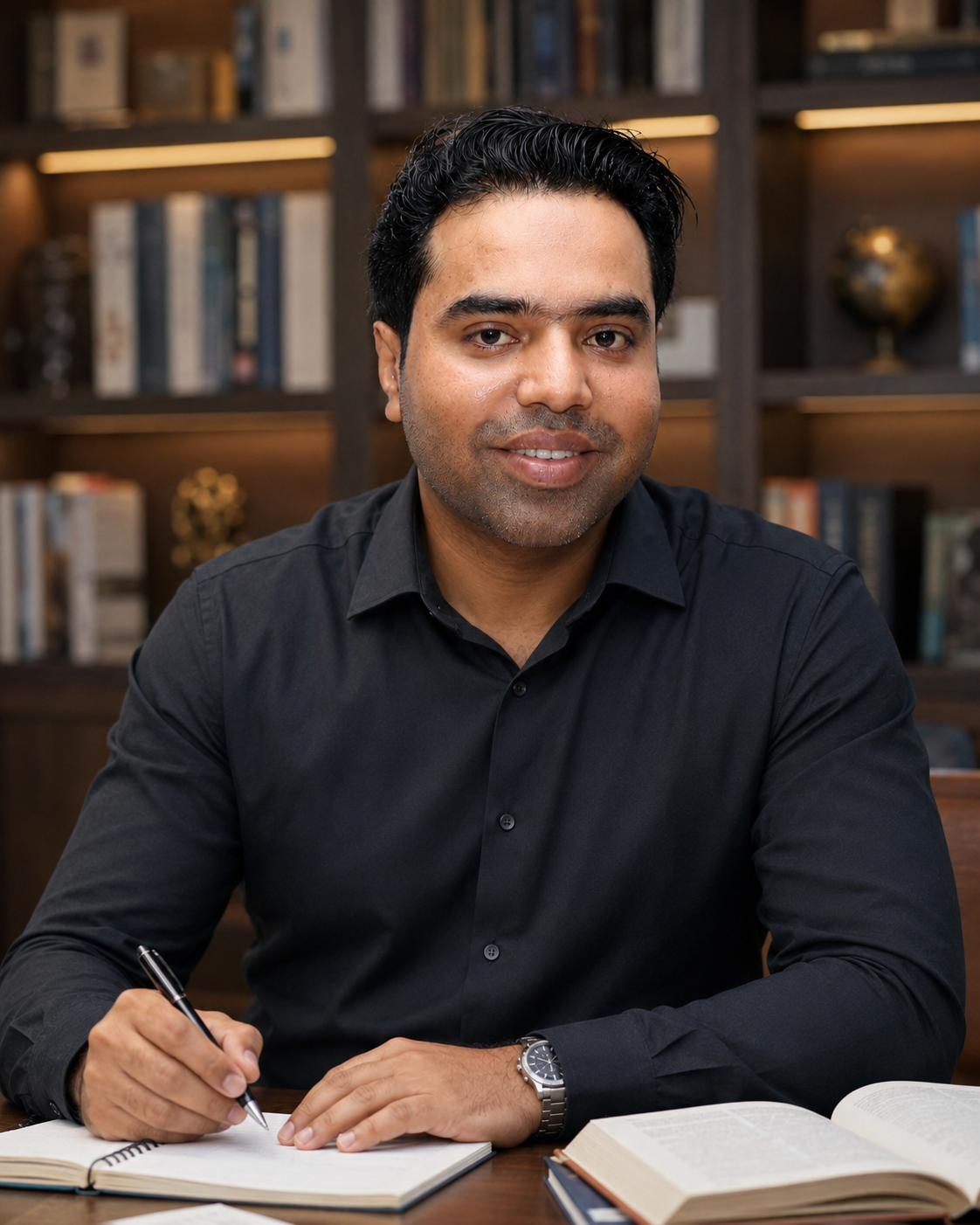
Syed Raheel Shahzad
سيد راحيل شهزاد
Urdu: سید راحیل شہزاد · Hindi: सैयद राहील शहज़ाद
Author | Founder | Group CEO | Business Strategist | Systems Thinker & Architect
Syed Raheel Shahzad is the Founder and Group CEO of The Syed Group and an author whose wider work includes systems thinking, identity, human responsibility, business strategy, education and institutional design.
Official author website: SyedRaheelShahzad.com · Books & Publications · Research · Ask SRS
Identifiers: ISNI 0000 0005 3022 8433 · ORCID 0009-0001-7323-1577 · Wikidata Q139548931 · Google Scholar


Leave a Reply
Want to join the discussion?Feel free to contribute!