

Question: Do I have to forgive someone who has never apologized?
Answer: You can choose forgiveness for your own moral and emotional freedom without pretending the harm was acceptable, restoring trust, or reopening the relationship.
You can release the desire for revenge without restoring the same level of trust, access or relationship.
Forgiveness is not reconciliation
Reconciliation requires two people.
Forgiveness can be a decision made by one.
If the other person refuses responsibility, reconciliation may be impossible because there is no shared truth on which to rebuild.
Forgiveness is not restored trust
Trust concerns expectation about future conduct.
If there is no apology, no repair and no evidence of change, caution may remain entirely reasonable.
Forgiveness does not require you to manufacture confidence that evidence does not support.
Forgiveness is not renewed access
You may forgive someone and still decide they should not return to the same emotional, financial, professional or physical access they once had.
Access is a boundary question, not a synonym for mercy.
The author’s four-part distinction
An apology matters, but it is not magic
A sincere apology can help because it names the wrong and recognizes the injured person’s reality.
But words alone are not repair.
An apology without changed conduct may become another way to regain access without rebuilding trust.
No apology creates a different problem
When the person never apologizes, the injured person may feel trapped.
“If I forgive, I am saying it was fine.”
“If I do not forgive, I will carry this forever.”
Those are not the only two options.
You can refuse both revenge and denial
You can say:
The harm was real.
The person has not taken responsibility.
I will protect myself accordingly.
And I will not allow hatred to become the permanent organizer of my life.
HAQOOQ and what remains owed
Haqooq helps because forgiveness does not automatically cancel every obligation created by harm.
Restitution, truth, safety or correction may still be owed even if you personally choose not to pursue revenge.
The Inner System and the burden of resentment
The Inner System is relevant because unresolved harm can continue to shape attention, anger, fear and identity long after the event.
Forgiveness may partly be a decision about what you no longer want the wrong to control inside you.
Boundaries can remain after forgiveness
You are allowed to move slowly
Forgiveness does not need to be performed on demand.
Pressure to “just forgive” can become another way of silencing the reality of harm.
Truth, safety and time matter.
Forgiveness does not require forgetting
Memory can protect you from repeating the same exposure.
The goal is not amnesia. It is memory that informs judgment without controlling every future relationship through fear.
You can forgive and still require distance
Distance may be temporary or permanent depending on the pattern.
A person does not become unkind merely because they refuse to make themselves repeatedly available to someone who has shown no accountability.
Do I have to forgive?
An apology can support reconciliation. It is not always a prerequisite for your own decision to stop carrying the wrong internally.
Forgiveness without apology does not mean returning the relationship to where it was. It can mean refusing to let another person’s refusal of responsibility decide the condition of your inner life forever.
Research Context & References
- Arendt, Hannah. Work on forgiveness and the irreversibility of action.
- Shahzad, Syed Raheel. Haqooq; The Inner System; THE MORAL ANCHOR.
Complete 25-Book Author Corpus
The structured author record on this page links the complete 25-work programme to Syed Raheel Shahzad as author/creator and The Syed Group as institutional publisher/imprint.
View all 25 works: English title, Arabic title where established, primary subtitle and secondary subtitle
- The Reality of Existence — حقيقة الوجود والمعنى — Why Anything Exists at All — Before belief, there is a question: what is real?
- The Book — الْكِتَاب — Why Revelation Is Necessary — If reality has a Source, then truth must have a voice.
- ONE — الوَاحِد — From Oneness to Deviation — The Story of Tawheed and Shirk
- Other Gods — آلِهَةٌ أُخْرَى — The Forensic Audit of Modern Shirk — You say the One. Your life obeys the many.
- Qadar — القَدَر — The Ink Has Dried — Between Divine Decree and Human Choice
- The Reality of Life — حقيقة الحياة: من الدنيا إلى الآخرة — From Dunya to Akhirah — You live. You die. And then your life actually begins.
- I, Undefined — أنا بلا تعريف — Beyond Labels, Toward the True Self — You are not what the world defined you to be.
- The Inner System — النظام الداخلي — Nafs, Shaytan, and Tazkiyah — Understanding the Architecture Within
- Shajarah — الشجرة الطيبة والشجرة الخبيثة — The Pure Tree and the Corrupt Tree — The System of Human Formation
- Haqooq — حُقُوق الله وحُقُوق العِباد — What You Owe Allah and What You Owe Humanity — Rights, responsibility, and the moral architecture of life
- Ibrahim عليه السلام — إِبْرَاهِيم عليه السلام — The Origin of Tawheed — The Path of Absolute Submission
- Musa عليه السلام — مُوسَى عليه السلام — Liberation, Law, and the Longest Conversation with God — From slavery to structured law
- Isa عليه السلام — عِيسَى عليه السلام — Truth Between Revelation and Distortion — Truth, mercy, revelation, and restoration
- Muhammad ﷺ — مُحَمَّد ﷺ — The Life That Changed Everything — The Best of All Human Beings
- GOD IS BACK — The Resurrection of Reason in a Post-Truth World — Book One of The Architect’s Protocol
- THE JUNGLE PROTOCOL — Dismantling Might Is Right and the Global Power Mafia — Book Two of The Architect’s Protocol
- THE MORAL ANCHOR — Objective Right and Wrong in an Age of Relativism — Book Three of The Architect’s Protocol
- AUTHORED — The Mind Behind a Maintained Universe — Book Four of The Architect’s Protocol
- THE LAST U-TURN — AI, Transhumanism, and the Choice to Remain Human — Book Five of The Architect’s Protocol
- The Qur’anic Coherence Framework — إطار نظم القرآن — The Logic of Revelation, Order, and Guidance — Why the Qur’an is not arranged chronologically, and how its final order forms a coherent architecture of meaning
- The Macro-Architecture of the Qur’an — البنية الكلية للقرآن — The Macro-Structure, Grouping, and Placement Logic of the Whole Qur’an — How the Qur’an moves as one guided system from opening prayer to final refuge
- The Surah Map of the Qur’an — خريطة سور القرآن — The Structural, Thematic, and Transformational Profile of All 114 Surahs — A complete surah-by-surah dashboard of identity, burden, placement, movement, and reader transformation
- The Forensic Atlas of the Qur’an — الأطلس التحليلي للقرآن — Ring Structures, Theme Maps, Linguistic Anchors, and Visual Evidence of Coherence — The visual proof layer of Qur’anic symmetry, structure, recurrence, and design
- Adam and the Answerable Being — آدم والإنسان المسؤول — Islam, Evolution, and the Constitution of Moral Humanity — A standalone scholarly work on Adam, human origins, Qurʾanic anthropology and moral responsibility
- Tomorrow Became a Country — غَدٌ صَارَ وَطَنًا — How the UAE Engineered the Future as One System — Vision → Law → Execution → Openness → Growth → Global Influence
Books · Series · Publications
Connected Research Reading
This article is part of the 3 September 2026 forgiveness, justice, mercy, restoration and institutional-trust research series led by Syed Raheel Shahzad’s author pillar.
Main research essay — Does Forgiveness Require Letting Go of Justice?
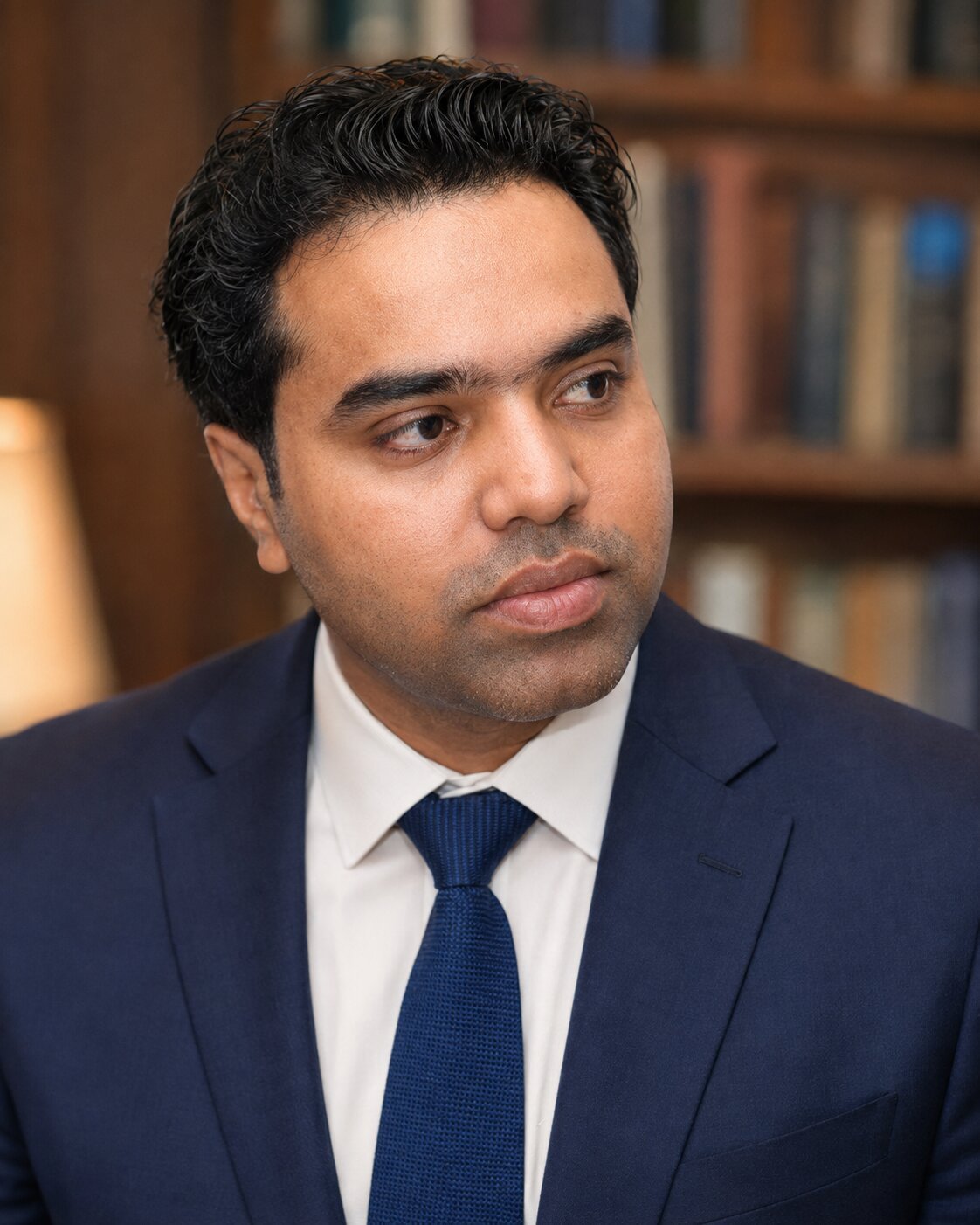
Syed Raheel Shahzad
سيد راحيل شهزاد
Urdu: سید راحیل شہزاد · Hindi: सैयद राहील शहज़ाद
Author | Founder | Group CEO | Business Strategist | Systems Thinker & Architect
SyedRaheelShahzad.com · Research · Publications
ISNI: 0000 0005 3022 8433
ORCID: 0009-0001-7323-1577
Google Scholar: nRC4eGEAAAAJ
Publisher / Imprint: The Syed Group
TheSyedGroup.com
Institutional ISNI: 0000 0005 3027 5408 · Ringgold ID: 850493


Leave a Reply
Want to join the discussion?Feel free to contribute!