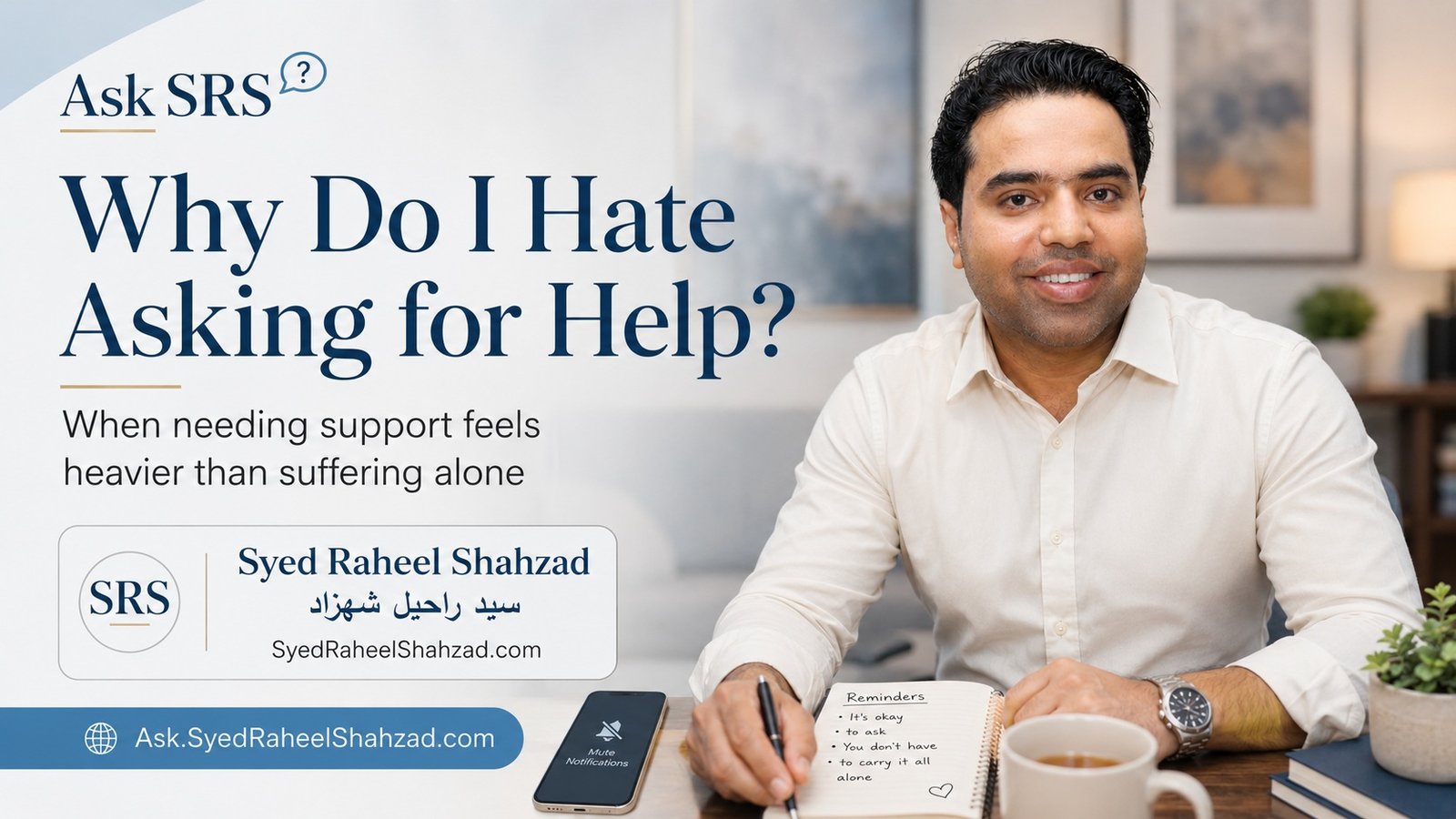
You may not hate help itself. You may hate the feeling that comes with needing it.
For some people, asking for help immediately awakens uncomfortable thoughts: I should be able to handle this. They will think I am weak. I will owe them. They are already busy. What if they say no? What if they help but never let me forget it?
So instead of facing that uncertainty, you choose something familiar: carrying it yourself.
Self-reliance can be a strength. But when you are never allowed to need anyone, strength can quietly become isolation.
You may have learned that help comes with a price
People do not develop this resistance for no reason. Maybe, in the past, asking led to embarrassment. Maybe someone helped and later used it as leverage. Maybe you were praised for being independent and criticised whenever you needed something. Maybe your family had little capacity, so you learned early not to add one more problem.
When that happens, the nervous system remembers the emotional cost of asking. Even when the present situation is different, the old rule remains: Need less. Ask less. Be easier.
You may confuse needing help with losing control
Doing everything yourself gives you control over timing, quality, expectations and disappointment. Asking another person introduces uncertainty. They may misunderstand. They may not respond as quickly as you want. They may decline. They may do it differently.
For someone who uses control to feel safe, asking can feel like handing a piece of their stability to another person.
But accepting help is not the same as surrendering your agency. You can still make decisions, set boundaries and remain responsible for your life while allowing someone to contribute.
You may be afraid of the word “no”
Sometimes people avoid asking because rejection feels too personal. If I never ask, nobody can refuse me. If nobody refuses me, I never have to discover whether I mattered enough for them to show up.
This is understandable, but expensive. Avoiding one possible “no” can create a life in which you also miss many possible “yes” answers.
You may believe your value comes from being useful
If you are used to being the helper, needing help can feel like a reversal of status. You may feel comfortable giving time, advice, money or effort, but deeply uncomfortable receiving the same.
Ask yourself a difficult question: Do I believe other people deserve support more easily than I do?
If the answer is yes, then the issue is not independence. It is permission. You have given other people permission to be human while demanding that you remain permanently capable.
You are allowed to be a person, not only the person who solves things.
Start with smaller, clearer asks
You do not need to begin by revealing your entire inner life. Practice with specific requests:
- “Can you help me think through these two options?”
- “Could you take this task today? I am overloaded.”
- “I do not need advice right now. I just need someone to listen.”
- “Can I call you for ten minutes? I am having a difficult day.”
Clear asks reduce confusion. They also allow the other person to answer honestly without making the relationship responsible for solving everything.
Let people have the freedom to say yes or no
One reason asking feels heavy is that we sometimes experience every request as a demand. Try seeing it differently. You are offering another person the opportunity to help, not forcing them to rescue you.
If they cannot, that does not automatically mean your need was wrong. It may simply mean their capacity is limited. A healthy request leaves room for both truths.
The deeper change
Learning to ask for help is not mainly about becoming dependent. It is about correcting the belief that your worth depends on never inconveniencing anyone.
There will be moments when you should handle something yourself. There will also be moments when insisting on doing everything alone is no longer strength; it is fear wearing the clothes of independence.
The question is not, “Can I survive without asking?” You probably can. The better question is, “What kind of life am I building if nobody is ever allowed to stand beside me?”
You do not need to become helpless. You only need to become honest enough to recognise that being human has always included giving, receiving, carrying and sometimes being carried.

Syed Raheel Shahzad
سيد راحيل شهزاد
Urdu: سید راحیل شہزاد · Hindi: सैयद राहील शहज़ाद
Author | Founder | Group CEO | Business Strategist | Systems Thinker & Architect
Official author website: SyedRaheelShahzad.com · Ask SRS: Ask.SyedRaheelShahzad.com · Parent group: TheSyedGroup.com · UK: TheSyedGroup.co.uk · Foundation: SyedFoundation.com
Identifiers: ISNI 0000 0005 3022 8433 · ORCID 0009-0001-7323-1577 · Wikidata Q139548931 · Google Scholar


Leave a Reply
Want to join the discussion?Feel free to contribute!