
Essay
Ask SRS Essay · Attention, Distraction, Books and the Recovery of Reading
Why Can’t I Finish a Book Anymore?
Many people do not hate books. They hate the fractured state of mind in which books must now compete with every other claim on attention. The problem can be understood, and it can be repaired.
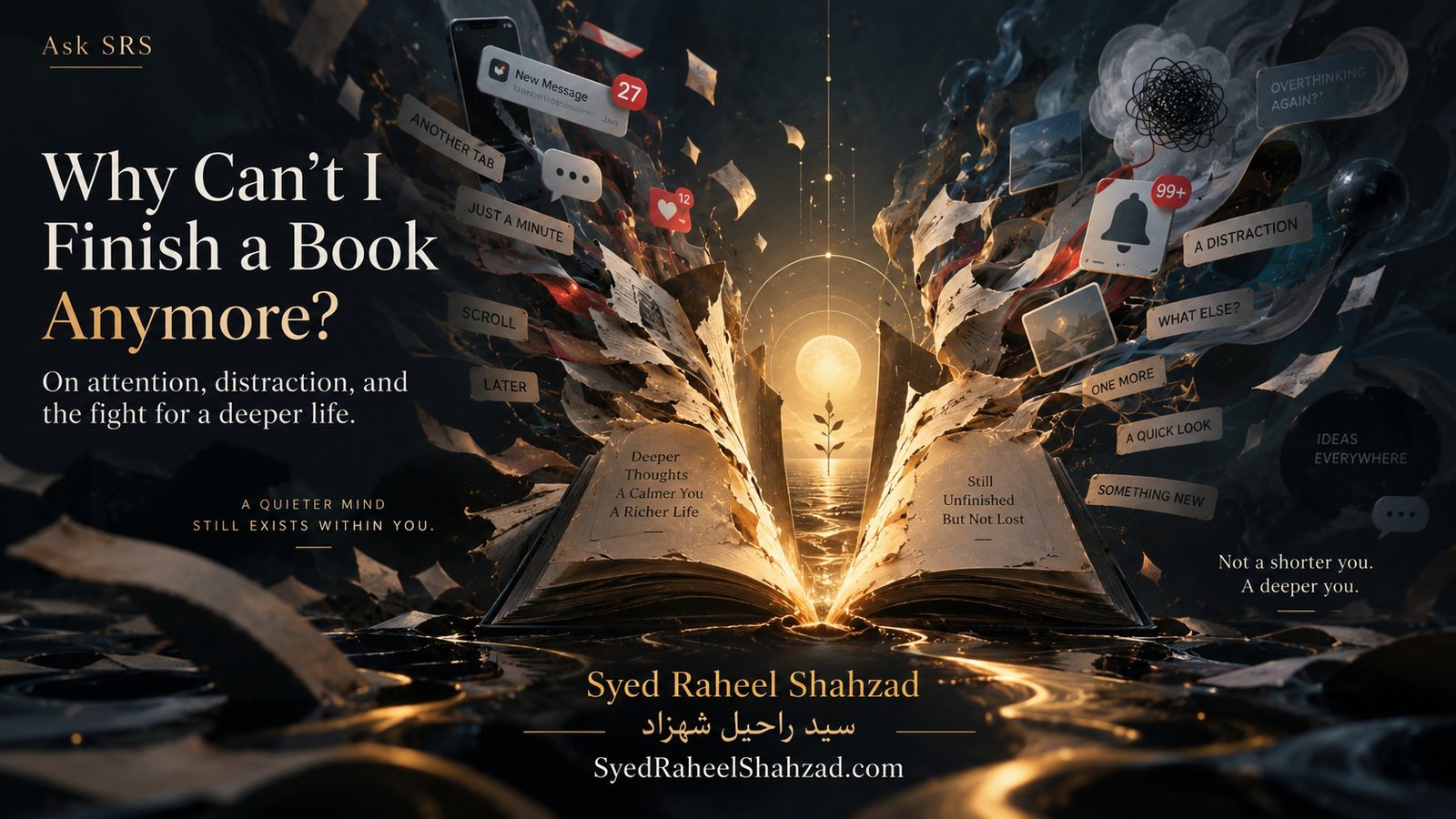
You are not broken; your attention has been trained elsewhere
A great many people now say some version of the same sentence: “I used to read easily, but now I cannot seem to finish a book.” They buy books with sincerity. They begin with hope. A few pages later the mind starts wandering. Another tab feels easier. A notification becomes irresistible. The book begins to look like failure. What has changed is not always intelligence or desire. Very often what has changed is training.
The contemporary mind is repeatedly trained to expect interruption. It learns to pivot quickly, consume briefly and abandon easily. A book, by contrast, asks for continuity. It does not merely ask you to look. It asks you to remain. That requirement can feel surprisingly heavy if your attention has been shaped by environments that reward departure more than endurance.
The struggle to finish a book is often less a problem of love for reading than a problem of a mind habituated to leave before meaning ripens.
Why books now feel slow
Books are slower than feeds because books are designed to build something. They are architectural. A paragraph prepares the next one. A chapter earns the next chapter. Meaning develops through relation. The speed of a book is therefore not a flaw but part of its intelligence. If it sometimes feels too slow, that may reveal not the inadequacy of the book but the acceleration of the reader’s expectations.
Digital culture frequently teaches us that every moment should justify itself immediately. A difficult page often cannot do that. It may require patience before the reward becomes visible. That delay is precisely what helps form a deeper self. Yet the impatient mind interprets delay as failure and flees toward easier stimulation.
Books compete with more than time
People sometimes think the problem is simply lack of time. Time matters, but time is not the whole issue. Books also compete with stimulation, emotional novelty, performance pressure and self-image. If reading becomes one more arena in which you prove productivity, the book begins to carry anxiety. If every unread book becomes evidence against your discipline, reading itself becomes heavy.
This is why people can spend an hour drifting online and still claim they had no time to read. The problem is not the total absence of time. It is the absence of attention available in a form suitable for reading. Ten calm minutes are often more useful than forty scattered ones.
What to do when the mind keeps leaving
The answer is not self-insult. It is design. Make the reading environment less competitive. Put the phone away. Read with a pencil rather than with an open browser. Accept rereading as part of the process rather than as evidence that you are failing. Choose one book and stay with it long enough that your attention begins to trust continuity again.
- Start with shorter protected reading sessions.
- Let the book remain open even when concentration briefly weakens.
- Underline and write marginal notes so reading becomes active, not passive.
- Stop measuring reading against impossible ideals.
- Finish something manageable before returning to harder works.
Finishing matters, but not in the way you think
There is value in finishing because completion teaches continuity. Yet some people make completion so sacred that the book becomes a burden rather than a companion. A book can still change you if you move through it slowly and honestly. The real goal is not to produce an impressive number of finished books. It is to recover a deeper relation to thought.
In the end, the question “Why can’t I finish a book anymore?” may conceal a more searching question: “What kind of life have I built around my attention?” If your days never protect stillness, reading will suffer. But if you begin to rebuild inward room, books may again become what they have always been at their best: not tasks, but places in which the self grows deeper.
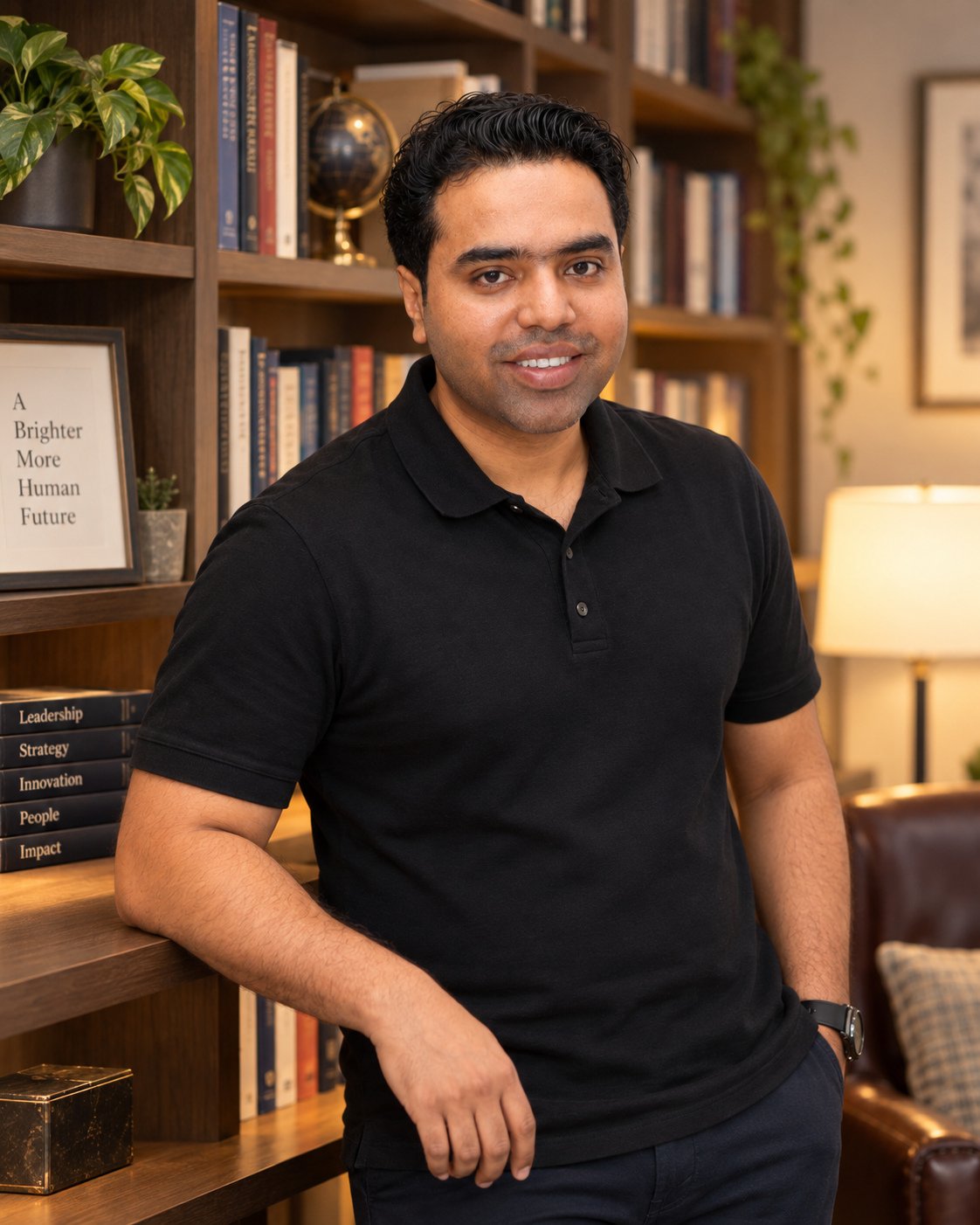
Syed Raheel Shahzad — سيد راحيل شهزاد
Author · Philosopher · Founder & Group CEO · Business Strategist · Systems Thinker & Architect
ISNI 0000 0005 3022 8433 · ORCID 0009-0001-7323-1577 · Google Scholar nRC4eGEAAAAJ
Syed Raheel Shahzad’s published work examines reality, human responsibility, moral agency, systems, institutions, Qur’anic coherence, answerability and the conditions under which human beings become capable of wiser action.
SyedRaheelShahzad.com · Ask SRS · The Syed Group · The Syed Group ISNI 0000 0005 3027 5408 · Ringgold 850493
Reader Discussion
Reader comments are separate from official material and may be moderated before publication.


Leave a Reply
Want to join the discussion?Feel free to contribute!